
Thus have I read: Nothing lasts for ever

My father read the 108 volumes of the Kangyur three times, and the 16 volumes of the Bum 35 times. He took up this practice after retiring from his government job. I remember him reading aloud with his steady voice filling our home and also spilling out into the street where it would reach the ears of people passing by. Many would pause and say that simply hearing him brought them a sense of peace. It is said that when holy texts are recited aloud, all forms of life hear them, and peace spreads to every being.

Once, I asked him if he truly understood what he was reading. He smiled and said that he did. That as he read, he could visualise the words, and at times the stories brought the Buddha vividly into his imagination and moved him to tears.

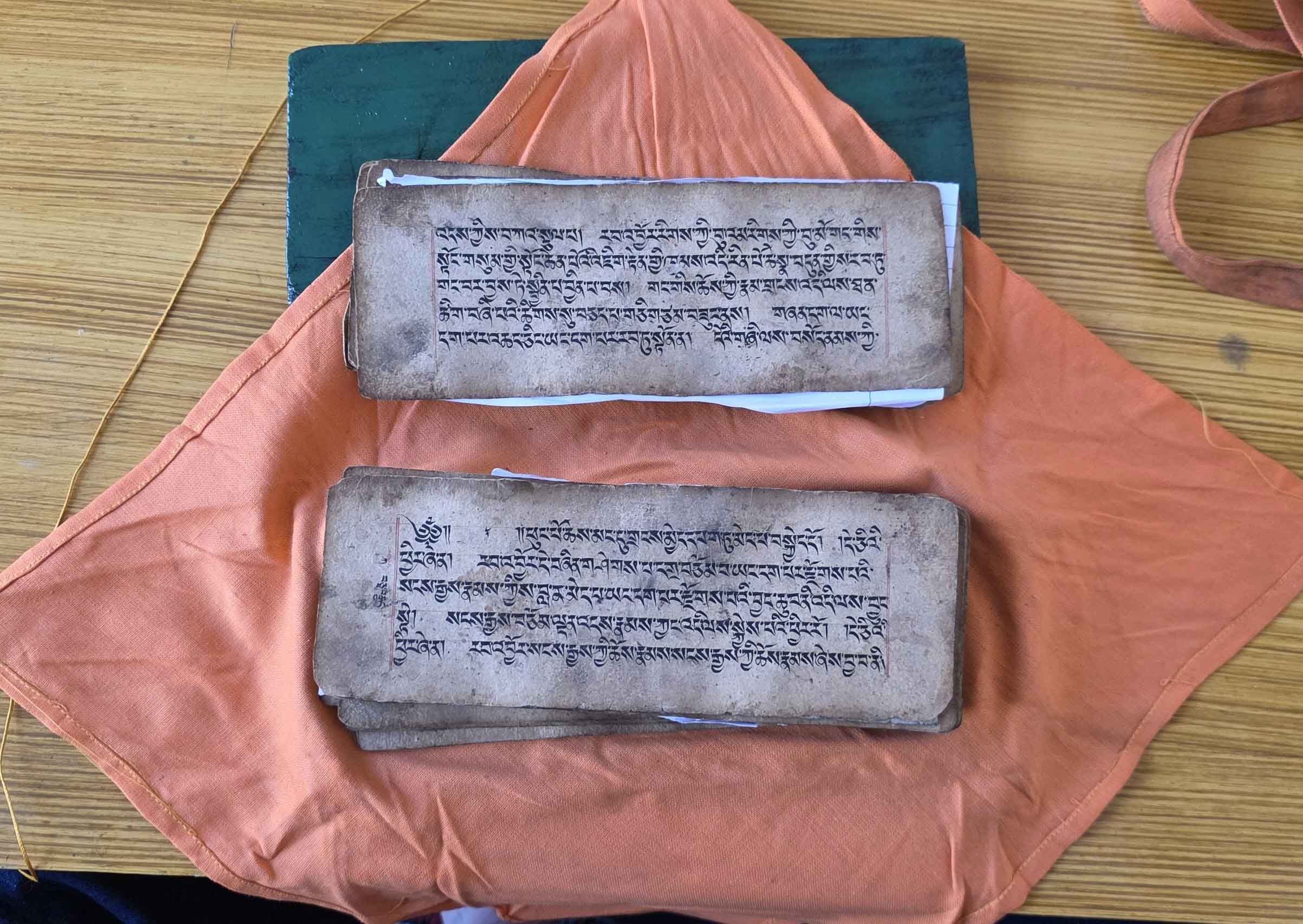
My first encounter with the holy text was with Dorje Chotpa, or the Diamond Sutra. It did not feel accidental. It was as though the book had been quietly waiting for me and was destined, in some way, to be found. In our chapel, a very old handwritten copy on handmade Tibetan paper, rested in silence, as though aware that one day I would turn its pages. I read it once and I did not fully grasp its depth. Later, I returned to the English translation by Red Pine, listened to podcasts that explored its meaning, and continued reading the original script aloud, just as my father once had. What unfolded was a gentle dialogue between the Buddha and his disciple, Rabjor. It felt alive rather than distant. The words themselves seemed to carry a subtle energy quietly imparting the wisdom I was ready to receive and needed: That all things including various phenomena, states, and conditions, arise and pass, never lasting and never fixed.

It is said that to hear or read the Diamond Sutra is itself the result of great merit that one must have earned the fortune to encounter it. Tradition also holds that the very place where the text is kept becomes blessed by its presence.

Through my research, I discovered something remarkable. The honour of being the world’s first printed book in recorded history belongs to none other than the Buddha’s Diamond Sutra or Dorje Chotpa. In fact, it is the oldest known complete printed book with a definitive date.

In the Diamond Sutra, one frequently comes across the phrase, “Thus have I heard,” which suggests that the text was not a later invention, but rather a record of an actual event. The words, “Thus have I heard” are understood as the direct notation of an eyewitness account, i.e. notes taken and preserved, which became the Dorje Chotpa.

The event itself is introduced as: “Thus have I heard. Once upon a time, in the Jetavana Monastery at Shravasti…”—a place that still exists today. The Dorje Chotpa narrates a true historical moment of a sermon delivered by the Buddha to 1,250 disciples with Rabjor, the eldest and wisest among them, asking the questions.

For me, Dorje Chotpa describes a deeply conducive learning environment. The very first chapter sets the scene in a manner that I would regard as the ideal classroom. It presents the Buddha as the ideal teacher: Humble, prepared, and impartial. Before delivering his sermon, he walks from house to house, accepting whatever food and alms are offered, treating everyone equally, showing no preference, no pride, and no favouritism among his disciples. The dialogue unfolds with Rabjor posing thoughtful queries, and the Buddha, pleased with each, often exclaims, “Excellent!” encouraging him to ask more. As I continued to read, I noticed how each response was layered, full of examples, open to many different ways of being understood. I was particularly struck that the one asking all the questions is described as the eldest and wisest. Somehow, that makes me pause. It reminds me that wisdom does not bring an end to inquiry even for the Buddha’s eldest disciple, Rabjor. Learning never really ends and there is no final state of mastery. The text also emphasises that knowledge should not be hoarded; it must be shared. Knowledge itself is not static. It keeps on evolving as it propagates. In the same way, it teaches the practice of generosity—giving freely, without any thought of return. Such an act, the Buddha explains, carries immeasurable merit. To Rabjor, he points out that while offering material wealth is indeed noble, there is a merit far greater—vast as the countless grains of sand on the bed of river Ganges, boundless as the infinite directions of east and west—in the sharing of knowledge and wisdom.

The book also teaches us not to take pride in power, status, health, position, or fame and that all of these are transient. Life is followed by death, health by disease, and even the universe itself is impermanent. One message in particular stands out to me as deeply important: The text teaches us not to become obsessed with even our own religion but practice its principles. The Buddha advises Rabjor to regard his teachings as a boat to cross a river, which should be used to reach the other shore and then left behind.

The earliest printed copies of the Dorje Chotpa still exist in the British Museum in London. At the end of the text, there is an inscription stating that it was printed by a son in memory of his late parents for their salvation. Remarkably, it is the belief that merit can be earned by spreading the wisdom of the text has helped it endure through history and ensured that it has been preserved as the world’s first recorded printed book.

In short, the Diamond Sutra teaches us about impermanence. At one point, a disciple asks the Buddha the name of the sutra he was teaching. He replied, “Dorje Chotpa, the Book of Highest Wisdom.” He advised them to memorise the name but told them not to cling to it as a great book. He said, “Read it, awaken your mind, and achieve realisation. Don’t get attached or worship it as a great book but practice the sutra and propagate its teachings, even if it is just four lines.” Then he concluded by saying, “What is in a name?” thus emphasising the fundamental truth of impermanence. For these reasons, Dorje Chotpa is regarded as the book of highest wisdom. It has been printed and propagated, often in loving memory of someone dear. This is a book to be read, understood, and embraced with faith. Its wisdom is said to endure until the end of the world. This is true not only for the Diamond Sutra but for all great texts: One should not cling to them, but read, understand, and practice their teachings.

By Dr Spalchen Gonbo

Dr Spalchen Gonbo is a Paediatrician based in Ladakh.
A small bite and a big question

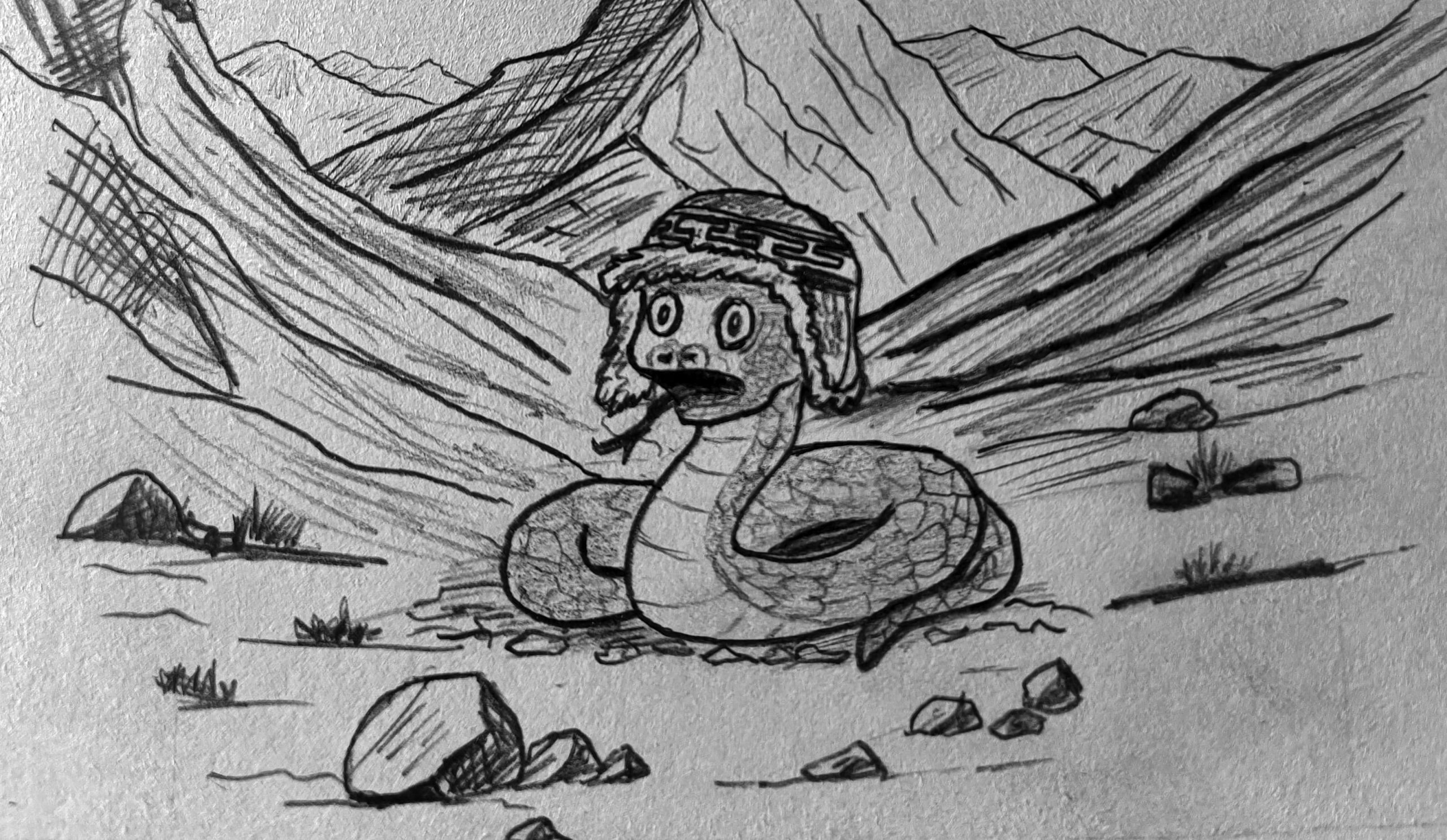
In June 2025, an unusual case was reported on the Integrated Disease Surveillance Programme (IDSP) portal from Community Health Centre, Khaltsi. It was a case of snake-bite and is possibly the first documented case of snake-bite from Ladakh. In surveillance terms, it was reported as a ‘probable’ snake-bite. However, it was real in every sense with a clearly visible fang mark.

Though formal reports are rare, anecdotal accounts and informal sightings have been surfacing over the years especially from the western regions of Ladakh, including Kargil district and the Sham area of Leh district. There are no historical records of venomous snakes from these regions.

For decades, Ladakh has been considered too cold, too dry, and too high for snakes. This is not entirely true. In warmer regions of Leh such as Sham and Kargil sightings have been trickling in over the years. There have been whispers of thin black snakes winding through sun-warmed rocks. They are not known to be dangerous and possibly not venomous in any threatening sense. Sources on the internet indicate the presence of a species called Ladakh cliff racer (Platyceps ladacensis), which is considered to be non-venomous for humans. Its presence has been mentioned as early as 1871 by Scottish zoologist and anatomist, Dr John Anderson.

The absence of previously documented snakebite cases from this region may in partbe attributed to minimal disturbance of the natural habitats of these species in the past. However, rapid development in the form of road construction and infrastructure expansion more recently has led to degradation and fragmentation of habitats contributing to an increase in snake-human interactions. This may lead to a provoked bite i.e. a bite in self defence.

In addition to this native species, there had been instances in which snakes reach Ladakh from other parts of the country. They come hidden in cargo, especially hay, which is transported by trucks to Ladakh in the summer. These non-native snakes have occasionally made an entirely unexpected appearance in Ladakh. There was once a case of a cobra that was found in Ladakh. It possibly reached here on a truck. Thankfully, it was captured and sent back to Jammu, almost like an accidental tourist that has overstayed its welcome! The incident was likely a bite by a local non-venomous snake, but it cannot be overlooked. There have been instances of dangerous snakebites by displaced and transported snakes that do not belong to the specific place.

It is prudent for healthcare workers to be trained in the management of snakebites, and for health facilities in Ladakh to start stocking snake anti-venom, regardless of whether the region is endemic for snakes. There is growing evidence that climate change and ecological shifts are changing the distribution patterns of various species and whole ecosystems.

For now, this case remains an anomaly. The old maps of what belongs and what doesn’t are blurring amid growing connectivity, climate change, migration, and changing living conditions across regions. In addition, with climate change, ecosystems are also shifting and moving, and snakes may very well be early messengers of a world that is re-arranging itself. As I write this, news has emerged of king cobra sightings near Mount Everest in Nepal—a development that has startled scientists! In addition to preparing our healthcare system for such emerging challenges, perhaps we must begin to listen not just to data. We should possibly also listen to what the snakes have to say. Perhaps what we are witnessing is just not a warning but a distress call from the displaced and the disturbed. They seem to tell us to listen more carefully to the land, its native creatures, the weather and everything around us. They also tell us about all the creatures that arrive quietly, unexpectedly, or unwantedly. Sometimes, some of them leave behind a big scar and many questions.

Text by Dr Spalchen Gonbo

Sketch by Padma Stanzin Dawa

Dr Spalchen Gonbo is a Paediatrician based in Ladakh.

Padma Stanzin Dawa is pursuing a Master’s degree in Environmental Science and Anthropology. He enjoys learning new things and loves drawing in his free time.

Ham-pa: Bravery or cowardice?

When I heard the news of the recent case of poaching in Kanji, a Ladakhi word popped up in my mind. It possibly describes the poachers’ attitude. The word is Ham-pa (ཧམ་པ་). I thought to myself, “How can someone be so audacious to hunt an endangered animal in broad daylight despite strict laws and surveillance in a society that prohibits poaching? Hampa-bo!”

The closest English translation for Ham-pa in this context is avarice and covetousness. Avarice means excessive or insatiable desire for wealth and gain. Covetousness means an intense, often selfish, desire for something, especially wealth or possessions, which belongs to someone else and borders on envy and greed.

I am still trying to understand the confidence of poachers to commit such a crime in a society that has stringent laws against poaching. Ham-pa is the only possible explanation: They seem to be certain that they won’t be caught, no matter how wild or outrageous their actions are. In India, poaching of animals listed in Schedule I and II of Wildlife (Protection) Act, 1972 carries a punishment of imprisonment for a minimum of three years, which can be extended to seven years, along with a fine of a minimum of INR 10,000.

I cannot help but wonder about the psyche of a poacher. I imagine it must be a complex mix of desperation, greed, and defiance. Many a time, they do not consider their act to be a crime or, possibly feel that they can get away with it akin to breaking traffic rules. Economic hardships may push individuals to poach for survival and to sell animal parts. Thus, greed may be a reason. Others might be driven by a pursuit of thrill, a sense of power, or to revel in the high of engaging in an illicit activity. Some lack empathy and regard wildlife as objects rather than living beings. Cultural traditions or disregard of different forms of authority may be used to justify their actions. Psychological factors such as impulsivity and moral detachment may also play a role by enabling them to ignore the ethical and legal consequences. Finally, personal gain or a sense of rebellion may also fuel this illegal indulgence.

When we hear about poaching, we often picture the individuals involved as dangerous and sinister. We assume that they will stand out in a crowd and be easily recognisable. But in reality, they are just ordinary people—sometimes even well-placed and affluent members of society. Some of those who get caught might be doing it for the first time while others may be indulging in it for fun. Still others engage in it due to peer pressure while some are repeat offenders.

This reflects on society as a whole. For instance, how often should we accept the rules of our society?All the time! We must uphold the laws of a civilised society, especially ones meant to protect the environment, wildlife, and social ethics. The laws against poaching are part of an effort to preserve biodiversity and prevent the extinction of various species. While laws evolve with social values, blind obedience is not enough. In addition to active enforcement, we also need ethical commitment and moral action. In many poaching cases, the offenders escape justice due to various loopholes in the law or corruption in the system. When laws fail to effectively protect wildlife, citizens must push for stronger regulations, stricter enforcement and greater awareness. A true civilisation is not just about having laws but also about the moral responsibility of upholding and safeguarding moral values, including our responsibility towards nature. This is why the word Ham-pa (ཧམ་པ་) continues to reverberate through my mind. Interestingly, the word has multiple meanings in Ladakhi with positive as well as negative connotations. In a positive sense, Ham-pa implies courage and bravery. We might praise someone as brave by calling them “Ham-pa-chan!”, describe a bold action as “Ma hampa chos!”, or encourage someone to be fearless by saying, “Ham-pa chos!”. However, Ham-pa also has a negative meaning and can be used to refer to avarice, conceit, covetousness, greed, deceit, bragging, viciousness, brutality, and boastfulness. It embodies the forceful and selfish traits that are associated with the poaching of innocent animals. This duality in meaning—one reflecting noble courage and the other, destructive greed—reflects the complexity of this word used across Ladakh, where it may be pronounced as Ham-pa, Ham-ba, or Ham-wa. This has important lessons for how we as a society need to address the issue of poaching in Ladakh.

By Dr. Spalchen Gonbo

Dr. Spalchen Gonbo is a Paediatrician based in Ladakh.

An ode to Ladakhi hip-hop

Music remains my bridge to home irrespective of my physical location. Music has been a part of my life for as long as I can remember. During my college days, I observed how Ladakhi students carried their cultural identity with them and one of the strongest expressions of their roots was music. No matter how far they went from their home-land, Ladakh was always with them through the songs they played and sang. My playlist included western classics and Ladakhi tunes. I would listen to Bryan Adams as often as Ka Dorje Stakmo. It is fascinating how a Ladakhi song like Chutey Chuzur can get everyone—Ladakhis and non-Ladakhis alike— tapping their feet and dancing. Its rhythm is universal and transcends language and geography.
Over the years Ladakhi music has evolved in many different ways. From the soulful tunes of folk music to the modern beats of contemporary artistes, it has grown while still staying deeply rooted. Today, youth are carrying it forward with remarkable passion and talent. Ladakhi rap and hip-hop in particular has gained momentum with artists like LaDoll, Cdup, Mar C, Lil Thun, Nochen, Slumdowg, Buda Gyatso, 2CEE, Togo.6 and Deldan making a mark. Their lyrics are powerful and reflect the realities, struggles, and aspirations of Ladakhi youth. The quality of their music is at par with mainstream Indian artists.
Artistes like Ladoll have used hip-hop to raise awareness about various social and environmental issues. Similarly, Mar C, Nochen, Cdup and Lil Thun have addressed challenges faced by Ladakhi youth using their music to highlight various challenges and aspirations including unemployment and climate change. As Ladakh continues to change, hip-hop has become a way for young people to connect with their roots while embracing globalisation. In my opinion, Ladakhi music is special in the ability of these artistes to retain the soul of our culture while adopting new expressions.
The trajectory of Ladakhi hip-hop and rap music mirrors global patterns. Just as Hindi film music has embraced collaborations, we have established singers in Ladakh featuring various rappers in their songs and blending traditional melodies with hip-hop. For instance, emerging Ladakhi rapper Lil Thun has been featured in tracks by artistes such as Faisal, KKT Tundup, and Iliyaaz. This fusion enhances the appeal of Ladakhi music among younger audiences and broadens its reach beyond traditional listeners. This fuses rap elements—fast-paced lyrical storytelling, social commentary, and contemporary beats—with other music genres. This integration of hip-hop and rap into Ladakhi music follows trends in global music industry, where hip-hop and rap have become a key part of mainstream and popular music. This shift highlights the growing influence of hip-hop in Ladakh, which is reshaping its musical landscape in exciting new ways. An example of this is Buda Gyatso’s recent performance at a public event in Leh, which highlights the genre’s rising popularity and its growing acceptance in mainstream Ladakhi society.
Ladakh’s rap scene is still in its early stages but with passionate artistes leading the way, it has the potential to grow into a significant cultural movement. As more young Ladakhis engage with hip-hop, this genre will continue to evolve, blending the old with the new in unique and powerful ways. Hip-hop and rap are here to stay!

By Dr Spalchen Gonbo

Dr. Spalchen Gonbo is a Paediatrician based in Ladakh.

Editor’s note: This was first published as the editorial in the February issue of Stawa (Volume 12, issue 02)

Winter wisdom

The people of Ladakh have honed their understanding of the region’s unique weather patterns over the centuries. This traditional knowledge has been passed down orally across generations and strengthened through sustained observation.

One such insight is about the timing of snowfall. The phrase ‘Namlangs la munrup’ is used for snow that falls early in the morning. It means ‘dusk to dawn’ and describes snowfall that starts early in the morning andcontinues falling until dusk or beyond. People would comment, “This is not going to stop!” and feel happy! This is in contrast to another observation, ‘Phitog gi kha donkha’ (evening snowfall is a guest), which possibly means that snowfall that starts in the evening is of short duration. It might also be subtle advice to guests to keep their visits brief and respect the host’s space and time! This aligns with science, which has found that when it starts snowing in the early morning the snowfall persists for longer due to colder and stable atmospheric conditions. On the other hand, when it snows in the evening, the snowfall stops quickly due to residual warmth and unfavourable conditions.

Similarly, people in Ladakh have interestingly simple measures of the amount of snowfall drawing from everyday experiences. For instance, ‘Cha-rjes chot-pa’ is the smallest unit of snow. It translates as ‘just enough snowfall to mark the delicate footprints of birds on the ground’. This is rather poetic while also precise and charming. Others in Ladakh describe this amount as ‘Skunme kangrjes chatches’ (snowfall sufficient to mark the footprint of a thief). This expression blends practicality with humour especially when used to express dissatisfaction at the amount of snowfall.

Slightly larger amount of snowfall is termed ‘Ongmol gang’ (one broom full), which is ‘just enough snow that can be cleared with a single stroke of a broom’. These traditional expressions capture utility, observation and possibly a sense of satisfaction at the amount of snowfall. When it snows about six inches or the size of a brick, it is called ‘Pag-tsir’. Elders would comment with pride, “It must be two pag-tsir on the mountains, as we have one pag-tsir in the valley!”

Photograph and text by Dr. Spalchen Gonbo

Dr. Spalchen Gonbo is a Paediatrician based in Ladakh.

Bringing stars back to our lives

Recently Leh’s light pollution was as concerning to me as was Delhi’s air pollution. I was trying to catch a glimpse of the rare comet C/2023 A3 (Tsuchinshan-ATLAS), which appeared in the sky in October 2024. However, my efforts were thwarted by the bright outdoor lights near my hospital. No human may well be around to see it when it appears again near Earth after 88,000 years. Desperate, I requested my neighbours to switch off their lights, but they explained that the solar-powered automatic system made it impossible for them to control the light. This experience made me realise how many outdoor lights remain on for no reason and contribute to light pollution. Thankfully, I managed to find a place to see comet Tsuchinshan.

Dua-jug-ring is the generic term for comets in Ladakhi. Comets have historically been regarded as symbols of ominous events such as war and natural calamities in various cultures. For example, a comet reportedly appeared over Ladakh’s sky during the Indo-Pakistan war of 1965. This fuelled superstitions about its connection with the conflict. The appearance of a comet is regarded as a harbinger of misfortune in Ladakh. I have heard people in Ladakh saying, “Nam la chi shar mishar mashar shik tua-jug-ring mashar shik, sa la chi skyes miskyes maskyes shik tuk gi loma ma skyes shik!” (May the comet not appear in the sky, may poisonous plants not grow on the land). I have heard that people in Ladakh would not eat wild plants during this period as it was said that the comet had made it poisonous.

Astronomy is infectious! During the two weeks that comet Tsuchinshan was visible in the sky over Ladakh, my children and I learned to identify various stars, planets and constellations in the sky. Skarma Minduk is surely the most popular celestial body. Skarma Minduk or the Pleiades is an interesting and prominent cluster of stars in the night sky. Though the Pleiades is called Minduk or six stars, it is called the ‘seven sisters’ in other cultures. In actuality, it is a cluster of over 1,000 stars visible from Earth! It is characterised by a bluish hue due to its high temperatures and youth in celestial timescales.

Watching this constellation reminded me of the numerous songs in Ladakh dedicated to the Pleiades. “Gunam nang snon me skill de na minduk gi yaskor skor” (In the centre of vast blue sky, the Pleiades is roaming clockwise). We draw the Sun, Moon and seven stars on auspicious days such as Losar (Ladakhi New Year). The stars we draw during Losar with the Sun and Moon crescent definitely represent the Minduk. It is regarded as an auspicious star and also helps determine time for various agricultural tasks. The positioning of Minduk in the west when it sets during spring aligns with the sowing of crops in Ladakh. The movement of this cluster of stars across the night sky serves as a natural calendar for farmers signalling the optimal time to start planting their crop. Similarly Minduk rising in the east during autumn corresponds with the timing for harvest. It demonstrates how our ancestors were in harmony with nature. It also indicates how people in ancient times observed various celestial events and used them to pace their social lives. A good way to spot the Pleiades from Ladakh these days is to look at the night sky towards the north-east after 10 PM. In Leh, it is visible as a cluster of stars just above Lamdon School in the late evening sky.

Another celestial body that caught my eye was Skarma Mindun (Big Dipper, Ursa Major, Great Bear), which is one of the most prominent constellations in the night sky in the Northern Hemisphere. It is visible all the time in the north sky. It has a circumpolar movement around Polaris or the North Star. If you identify the Mindun, and thus the North Star, you will never get lost. It has helped travellers on land and at sea to navigate, keep time, and orient their location in the Northern Hemisphere. Mindun is a very prominent constellation in the night sky and it helps us identify the North Star, which is a major celestial landmark in the Northern Hemisphere. In Ladakh, it is said of the Mindun, “Skarma mindun sodey met Changna sharte chang nga nub” (How unlucky is the Big Dipper that it rises from the north and sets there too). In reality, Mindun does not ‘rise’ or ‘set’ as it has a circumpolar movement around Polaris. The position of the various stars that constitute the Big Dipper around the North Star gives us a fair idea of the time.

Three stars that are discussed often by farmers in Ladakh are Skarma Sta, Skarma Wa, and Skarma Thra. Despite their significance in local traditions and agricultural practices, I have so far not been able to locate or identify them in the sky.

These celestial markers are deeply interwoven with the region’s agricultural practices, rain patterns, and traditional beliefs. Sta and Wa are associated with rains. Sta rises earlier in the agricultural season when crops are maturing. The rains brought by Skarma Sta are considered vital for early crop growth and rejuvenating grazing lands. On the other hand, Wa brings heavy downpours that can cause damage to crops and across the landscape. Skarma Wa is said to be visible in August and correlates with the monsoon-like rains in Ladakh. The word ‘Wa’ refers to a part of a watermill (Rantak) that channels water—a metaphor for its ability to cause heavy downpours. So, it is said about Sta and Wa, “Sta char rigoe rtsea , wachar gamtsoe ting nga” (The rain brought by Sta fall on the peaks but that brought by Wa reaches the depth of the oceans). Locals in Leh believe that if traces of winter snow, even as small as a mirror, persist on Leh hill when Skarma Wa becomes visible in August, then Leh will have an abundance of water in the agricultural season. Leh hill is the hill located in front of Khardong-la. Ya Yundum is a prominent landmark on this hill. It is often used by people searching for their livestock including dZo, which are left to graze in the mountains after agricultural tasks such as sowing are over. I have never seen winter snow last until August, which might be due to global warming and climate change. 

Then comes Skarma Thra, which does not bring any rain but it infuses medicinal value into water bodies (Sman-chhu). When Skarma Thra appears, people in Ladakh traditionally bathe in water bodies and hot springs. Many visit hot springs accompanied by Amchis, as it is believed that the cosmic effect of the star infuses medicinal properties in water, which is known as Sman-chhu (medicinal water) in Ladakh. I open the lid of my overhead water storage tanks to catch some of these celestial blessings if I am unable to bathein open water bodies! Another thing I have heard about this star is that when it appears in the sky, the harvest is nearly ready and it may or may not have received the final irrigation. If crops receive their final irrigation under Skarma Thra’s influence, the harvest is said to be plentiful!

How can I forget the Sun and the Moon! We have been evoking them in many songs specially ones associated with marriage and love. The Sun symbolises warmth, vitality, and sustenance in a land where winters are long and challenging. The Sun is invoked as a symbol of good fortune and prosperity for newlyweds. The Sun and Moon are sometimes used as complementary metaphors in love songs. The Sun represents passion and energy and the Moon symbolises calmness and grace. The description of the Sun and Moon in Ladakhi songs reflects the intimate relationship between people and their natural surroundings, which blends practical reverence with poetic expression.

I feel that it would be good if we are able to revive and then preserve dark skies over Ladakh. That way, our children will once again be able to see celestial objects and start identifying various stars, constellation and planets. We can have switches for outdoor lights. In addition, we could make it a regular practice in Ladakh to switch off all lights that are not needed. It really is a good time for family members sleeping on the roof when they can share folklores and gaze at the stars and planets above. It will not only inculcate good values and knowledge among our children but also distract them from staring at phone and computer screens! In addition, light pollution disrupts melatonin— a hormone that regulates sleep—production in our bodies by suppressing its release through exposure to artificial light at night. This can lead to poor sleep quality, circadian rhythm disturbances, and increased risk of various health issues.

Finally, it will help us curb light pollution, which has negative impacts on human health and ecology. Imagine the benefits of getting a good night’s sleep. Also imagine the positive effect it will have on wild animals including birds and mammals that live amongst us. Curbing light pollution will allow them to follow their natural sleep patterns, behaviours and help maintain the integrity of our environment.


Photograph and text by Dr. Spalchen Gonbo

Dr. Spalchen Gonbo is a Paediatrician based in Ladakh.

Time to change Ladakh’s road culture?

Some traffic behaviour are unique to Ladakh’s road. Imagine you are driving on the National Highway 1 towards Sham and you intend to turn right to Phyang village. You will naturally use your right indicator, slow down, look in the rear view mirror for any vehicles behind, keep an eye for vehicles in front, slow down and when you have the opportunity, turn right to enter Phyang. Now suppose you are driving on the same road but travelling to Nyemo. You see someone in your rear view mirror who wants to overtake you. What would you do? Are you among the people who would use the right turn indicator to signal to the car behind that they can overtake you? If your answer is yes, you have been immersed in Ladakh’s road culture! And what does the traffic rule say in this matter? Well, a vehicle indicator is meant to indicate what you are intending to do and not what you want others to do. The right response in this case should be to slow down a little, use the left turn indicator as you move a little to the left in the same lane to make way for the vehicle behind and let it overtake you. You could also use a ‘graceful’ hand gesture in such a situation to communicate “please go ahead” to the car behind.

Similarly, imagine you are driving down from Khardong-la towards South Pulu and you see a fully-laden truck climbing towards you. The road is only broad enough for one vehicle to pass at a time. The correct response would be to stop and use the left indicator to indicate to the oncoming truck that it has the right to way. However, in Ladakh one would most likely see the driver of the vehicle descending use their right indicator to convey to the oncoming driver that he or she has the right of way. Two main rules are applicable here. One pertains to the right-of-way and the other to the use of indicators to signal what you are intending to do rather than to command others!

In situations involving narrow slopes the right-of-way rules apply for safety reasons. It is more challenging for a vehicle climbing uphill to restart if it stops. The vehicle will face difficulties due to the uphill incline and the heavy load, which can cause it to roll back or struggle to gain momentum. It is easier and safer for a vehicle travelling downhill to stop and give way to the vehicle climbing uphill. The vehicle travelling downhill can stop more easily and restart with less difficulty as compared to the one climbing uphill. A truck climbing uphill has less manoeuvrability and control compared to when it is going downhill. Stopping and restarting on an incline can be hazardous for a heavy vehicle. In practice, it means that a when a vehicle is going downhill on a narrow road with a steep slope, it should stop and allow a vehicle climbing uphill to pass first. The vehicle going downhill should stop at a safe spot and use the left indicator to communicate its intention to the vehicle climbing.

Speaking about right-of-way, do we know when to flash the high beam light? It is meant to be used to alert a driver who is coming in the wrong lane or heading in the wrong direction. Often drivers in Ladakh use it to ask for right-to-way. It’s not always a polite gesture especially if you do not have the right-of-way! It can be seen as aggressive or demanding and potentially lead to confrontations as it is not a universally accepted or officially sanctioned signal. The right way would be to slow down and wait for the other driver to respond with a flash or a gesture. Making eye contact and gesturing politely to request permission to pass is a better way.

Also, when navigating slopes, there is a rule about the use of gears during a descent that most experienced drivers practice. When descending a slope, it is always a good practice to descend in the same gear that you would use to ascend that slope. The reasoning is that when you descend a steep slope on a low gear, you use the engine as a brake and do not need to use the brake, which may fail if used too frequently over a long period of time specially if you are also using the clutch .When descending a slope, using the same gear as you would to climb is also important to maintain control and safety. Lower gears provide engine braking, which helps control the car’s speed without relying solely on the brakes. This prevents the brakes from overheating, which may result in brake failure. A lower gear also limits the car’s speed and eases navigation of steep descents. So, the next time you take the Nyemo short cut make sure you use the same gear when you descend as you do when you ascend. And don’t forget the rule related to right-of-way on this narrow strip. You can thank me later!

In this context I remember a conversation I once overhead while taking a taxi ride from Kargil to Leh. The conversation was between the Ustaad (driver) and the Chela (assistant). The Chela asked, “Hey, what is the ‘L’ on that car?” The Ustaad replied that it means that the driver of the vehicle is a learner. This made the Chela very curious and he asked, “And how does having an L on the vehicle help?” The Ustaad explained that others on the road will make way for the learner. The Chela was very excited and suggested, “Hey Ustaad, then why don’t also put an “L” on our taxi? Then everyone will give us the right-of-way!

In India, the ‘L’ on a vehicle does stand for ‘Learner’. It is put when a person is learning to drive and holds a learner’s license. It also means that the learner has to follow certain rules. When you are driving with a learner’s licence, your vehicle must display a red ‘L’ sign on a white background on the front and rear. It should be clearly visible to other road users. The learner must possess a valid learner’s license for the class of vehicle they are driving and must carry it at all times while driving. The learner must also be accompanied by a person holding a valid driving license for the particular class of vehicle being driven. This experienced driver should sit in a position to take control of the vehicle if required. No passengers are allowed except for the instructor. Drivers with a learner’s licence are often restricted from driving during peak traffic hours or at night depending on regional traffic regulations and should maintain a speed appropriate for their level of skill. Furthermore, a learner’s licence is typically valid for six months, and the learner must apply for a permanent license within this period. Like the Ustaad and his Chela, most people are not aware of these restrictions and regard it as a ‘temporary’ licence until they get the permanent one. Thus, they are also unaware of the restrictions and rules that pertain to the holder of a learner’s licence.

Every other day we hear of a bike accident involving a tourist on Ladakh roads. In accident cases involving bikes, most people generally put the blame on the person in the larger vehicle even if the bike rider was at fault. Generally, the biker suffers more injuries. It is for this reason that it’s always a good idea to be careful on the road irrespective of whether you are riding a bike or driving a larger vehicle. Many tourists get into the saddle even before they are acclimatised and start navigating heavy bikes for the first time on unknown roads. Many of them are accustomed to multi-lane roads where it is ‘normal’ to overtake from any side. In Ladakh, I often see vehicles, especially bikes, overtaking from the left, which is not advised on a single-lane road. In fact, it is illegal to overtake from the left on a single-lane road. It might be safer for us to leave our egos on the back seat and apply the right-to-way rules to people who are unfamiliar with the rules of driving in these conditions at least during the tourist season!

However, tourists are not the only ones to blame for accidents. Many of the road accidents recorded in Ladakh are due to traffic volume and good road conditions, which seems to tempt drivers to drive at high speed. In June 2024 alone, Community Health Centre, Khaltsi received seven cases of vehicular accidents with 10 people who had serious injuries and two who were dead even before they reached the centre. An accident changes a person’s life forever, especially if there are deaths involved. I have seen many victims of road traffic accidents repenting the speed at which they were driving or their judgement, which contributed to the accident. Many of them have lifelong scars and suffer from post-traumatic stress disorder, which can be psychologically incapacitating to prevent—also making it illegal—them from driving ever again. In this regard, there is a very insightful Ladakhi proverb, “Rings rings pa bo, tus tus pa gore.” It tells us that if we rush and try to speed things up, we will only lose valuable time. On a lighter note, I remember treating a road traffic accident victim. As I was taking down the case history, he explained in all seriousness that the accident occurred while he was coming from the wrong side. I was puzzled as I have rarely heard people admit that they were responsible for an accident. I asked him why he was coming from the wrong side. He explained rather earnestly that Chang-la was closed due to snowfall and he was forced to come from ‘Rong side’!

By Dr. Spalchen Gonbo

Dr. Spalchen Gonbo is a Paediatrician based in Ladakh.

No booze, no blues, fewer bruises!

Ever since humans learnt the art and science of brewing alcoholic beverages, the regulation and consumption of alcohol has troubled communities, governments and people the world over. There are people who like to consume the occasional glass of alcohol as it relaxes them, while there are others who become addicted and pay a price with their health or worse their own lives and that of others. Alcohol has been linked to a range of diseases. It also has a strong correlation with a number of social evils. It is not surprising that many religions have strict rules regarding the consumption of alcohol. Similarly, alcohol is strictly regulated and heavily taxed in many countries.

In this context, we have had an interesting experiment in Ladakh over the last few months. Alcohol has not been available in markets across Ladakh for four months now and nothing has happened! Nothing happened in two aspects. No one, or at least a majority of the people, did not feel like they were lacking something and secondly, there have been fewer road accidents and violence in this period. The sale of alcohol in Ladakh has stopped for some time now and it is still not being sold. It was also not available in army stores and canteens. Ladakh has been on abstinence during this period.

In many ways, Ladakh has been like several states in India especially Bihar, Gujarat, Nagaland and Mizoram: The government in each of these states has banned the sale of alcohol. Bihar banned production, sale, storage and transportation of alcohol on its soil in a major policy shift in 2016 in an effort to create a society where every woman finds solace and safety in her home and community without having to deal with the spectre of domestic violence. This happened at a time when Bihar was the sixth largest consumer of alcohol in the country.

While in many states alcohol has been formally banned, this is not the case in Ladakh, especially Leh. There have been plans to make alcohol more easily accessible by giving licences for bars and restaurants. However, civil society organisations, especially women’s group, objected to this and as a result very few bars have come up so far. Alcohol remains a luxury. It is something we can live without. There is a minimum legal age for the consumption of alcohol. At 18 years, Ladakh and Goa have the lowest minimum legal age for alcohol consumption. In states such as Delhi, Punjab and Maharashtra only people above the age of 25 years are allowed to buy or consume alcohol.

I have heard various arguments in favour of making alcohol more easily available in Ladakh. One such argument is that Ladakh is a popular tourist destination and so alcohol should not be banned in the region. This is rather interesting for the simple reason that alcohol should not be consumed at high altitudes especially by someone who is not acclimatised. Alcohol generally increases urine output, which means it reduces fluids in the body unless it is constantly replenished. This means that alcohol consumption reduces the body’s capacity to acclimatise to high altitude conditions and increases risks of various altitude-related diseases.

In addition, alcohol causes respiratory depression and can depress the respiratory drive necessary for acclimatisation. Some people believe that it is good for a cold area as it warms the body. However, it actually has the opposite effect even though it gives the consumer a warm feeling. We have often seen people dying due to hypothermia after consuming a large amount of alcohol as they become unaware of the cold and die in their sleep. In emergency rooms at hospitals, doctors often smell the victims of road accidents or any other unconscious person to check for the smell of alcohol as drunk driving is a major cause of road accidents.

As I was thinking about all this, I was struck by the fact that we are never satisfied with how much we have of certain things in our lives. One example of this is the number of tourists visiting Ladakh. There was a time when 50,000 tourists in a year was a very large number. In the period after COVID-19 pandemic, there have been years in which over 500,000 tourists have visited Ladakh. Despite this, many people related to the tourism sector continued to argue for the need to find new ways to attract more tourists to Ladakh. We may agree or disagree with this proposition but we do need to weigh in various factors in determining how much is enough. That said, in my opinion making alcohol freely available cannot be justified in the name of promoting tourism or generating revenue for Ladakh or any other region. Ladakh has many other things to offer to tourists.

I had posted my views on social media about how alcohol was not available in Ladakh and that no one seemed to have a problem with it. Among the various responses I received was one from a person who frequently uses proverbs in daily conversations. The person used a Ladakhi proverb to make a point and said, “Sha dang mar la lhak milus!”Proverbs are a window into a society and its values, beliefs and wisdom. They often give us practical advice on various aspects of life. In this regard, I find Ladakhi proverbs to be very insightful as they have developed over several generations and encapsulates their collective experiences and norms. This means that proverbs are often open to multiple interpretations based on context and perspective. This proverb too can be interpreted in a number of different ways. “Sha dang mar la lhak milus!” roughly translates to, “Meat and butter have no leftovers!” one interpretation is that there will never be enough of food items such as meat and butter. This is interesting. Meat and butter are food items that are not essential and we can live without consuming them. They are food items that we tend to consume in large quantity when we have more resources available. This is also true for alcohol, which is something we can live without. “Sha dang mar la lhak milus” in a way describes how our desires, yearnings, wishes for some things never wane. It speaks about how there are some appetites that are never whetted or satisfied. Some yearnings never subside. Some needs never diminish .And yes, some things are never enough!

By Dr. Spalchen Gonbo

Dr Spalchen Gonbo is a Paediatrician based in Ladakh.

The quality of care

There is a shift in attitude in public hospitals. Quality is the major change that is evident in our public hospitals. This is a welcome change. Most people rely on public hospitals for their healthcare needs as private hospitals are often not within reach for many. A friend recently delivered a baby at a private hospital and faced some complications. She ended up spending about INR 40 lakh (INR 4 million) for a two-month treatment. It is for this reason that we need to improve public facilities and their quality of care.

Ensuring quality care in public hospitals often requires healthcare workers to go beyond their mandated duties. In public hospitals, resources are often limited but patient volume is high. Thus, each healthcare service provider must wear multiple hats and multitask to deliver care efficiently without compromising on quality. Nurses may not only have to administer medications but also provide emotional support to patients and their families. Doctors may need to juggle complex cases with administrative tasks and hand-holding while teaching and imparting knowledge to other healthcare workers. Allied health professionals could find themselves taking on additional responsibilities to ensure smooth patient flow and continuity of care. Despite challenges such as understaffing and budget constraints, dedication to patient welfare must always remain paramount. Thus, healthcare workers have to use innovation and resourcefulness to provide comprehensive care using every available tool and technique to meet the diverse needs of each patient.

There is a common phenomenon at public hospitals wherein a minority of the workforce shoulders a significant share of the responsibilities, while the remaining members adhere strictly to their designated tasks. I observed this too when our hospital was preparing for National Quality Assurance Standards (NQAS) certification. In fact, one of the assessors commented on it while they were examining our facility.

Thus, provision of quality care in public hospitals requires some added responsibilities and innovative thinking from healthcare workers. It’s about doing the same job differently. It’s about shouldering responsibilities. It is fundamental that workers cultivate a profound sense of ownership about their workplace akin to nurturing a personal venture. When employees feel that they have a genuine stake in their workplace, they become more than just workers. This sense of ownership instils a profound sense of responsibility creating an environment where individuals are not just carrying out duties but actively contributing to everyone’s collective benefit. They take pride in their work. Each worker recognises their role in the organisation’s success and failure.

There is a need to identify such workers along with mechanisms to encourage greater involvement from all staff members. By fostering a culture of appreciation and accountability, public hospitals can cultivate a more equitable and productive work environment. This will ultimately benefit healthcare workers as well as the patients they serve. Some workers become invaluable assets to specific workplaces due to their unique skills, experiences, and relationships built over time. Treating them alike and rotating them could disrupt workflow and diminish institutional knowledge. It’s important to recognise and retain such valuable contributors to maintain stability and excellence at the workplace.

A friend once mentioned that in countries like the USA, initial postings for doctors are often determined by the need of the healthcare system or the government, while subsequent postings may be more flexible and based on the preference of the worker while their performance will also influence these decisions.

Private facilities generally have a system to identify and recognise such workers. Such systems generally do not exist in public facilities. Without acknowledgment of their hard work, morale among such individuals may decline and impact team cohesion along with quality of care provided to patients. Furthermore, the absence of consequences for those who do not actively engage beyond their prescribed duties perpetuates a culture of complacency. Without accountability measures in place, there is little motivation for individuals to exceed expectations or contribute beyond the bare minimum. The minority who fulfil only their basic duties often go unchallenged, as there is a systemic acceptance of their limited involvement.

This reminds me of a Ladakhi proverb, “Chu skakan la shabash met chukar chakkan la kabkyon met!” The proverb translates as, “There is no one to praise for fetching water and no one to blame for breaking the pitcher.” This famous Ladakhi proverb reflects the views of the dedicated workers who are assets of an institution but often remain unrecognised. This statement encapsulates the frustration of unrecognised efforts and consequences in a system where neither diligent work nor negligence is acknowledged or held to account. It illustrates a lack of appreciation for those who fulfil essential tasks and a failure to address or discipline those who underperform.

By Dr Spalchen Gonbo

Dr Spalchen Gonbo is a Paediatrician based in Ladakh

Life in the Anthropocene

Recently, there was an announcement over an FM radio channel that the authorities in Ladakh have issued an order to restrict the movement of ‘stray domestic animals’ on the streets of Leh town. The justification is that they pose a threat to the movement of vehicles, especially ones related to tourism. This reminded me of the way India is portrayed in western films, which often include scenes with stray cows wandering the streets. This seems rather clichéd and inaccurate. Though this imagery is exaggerated, it does have a grain of truth. It seems to depict a developing India. Although their intention is to introduce some humour, this image does raise the question on why stray animals are on the streets!

Of late, the streets of Leh too resemble that of the rest of the country. Over the last five years, we are observing many animals, especially donkeys and cows, on the roads of Leh town. This can be for two reasons: Either they don’t have a place to be in or we are intruding into their spaces. For me, the latter seems very likely.

Imagine being an animal in Leh. Say, a cow, donkey or a dog about say five years back. There were dedicated spaces for animals everywhere where they could graze or rest. They were village commons and served as green corridors along Tokpos (streams) and Yuras (water channels). During summers, when the Lorapa system (field guarding system) was active, anyone could graze animals in these spaces as long as they had people herding the livestock. Most of these spaces have vanished over the last five to ten years and transformed into enclosed structures. Similar spaces that were called Charakhas were also village commons and have now been turned into community spaces and halls for social gatherings. We now have a community hall at every corner of Leh town, which may not always be the wisest use of resources. The Chhu-lams have been converted to concrete footpaths, roads for motor vehicles, or tiled surfaces. Water channels have been reinforced with concrete, which does not blend with nature or look appealing. As a result, no vegetation grows there anymore and there is nothing for animals to eat.

Like humans, animals too don’t like being in captivity. My family owned donkeys, cows, dZos until 10 years back. We also had goats and sheep until some 30 years back. Now we only have cows. We lost one cow to a road accident, which we deduced based on its injuries. We lost another one to electrocution in 2023. That is when I discovered that this is a common occurrence during the rainy season. I have heard that Power Distribution Department does provide monetary compensation for lives lost.

Our donkeys would vanish for months and then return home when it was cold outside. At other times, they would return home to give birth and once the foal was able to stand, and barely walk, they would vanish once again. This means these animals not only need food but also require freedom, security and love. Their sense of being is as strong as humans. We have an urban and modern life for now. We are enjoying high-speed 100mbps internet and milking cows by hand at the same time. Many families who own land in Leh still cultivate vegetables using organic methods and their sons and daughters drive their produce in modern cars for sale in Leh market.

Coming back to animals on the streets, we need to remember that animal rights extend beyond the prevention of physical harm. It encompasses the right to live without unnecessary interference in their natural behaviour. It is our duty to protect them, maintain speed limits especially on rural roads and create public awareness on these issues. By acknowledging their rights and adopting steps to minimise negative impacts, we can have a more harmonious coexistence between humans and animals to nurture our shared environment. Many humans are aggressive and hostile towards animals such as dogs based on their perceptions, prejudices, and fear. This in turn, makes the dogs suspicious and hostile towards humans. In this regard, the registration of pets like dogs with the authorities is a good idea to keep a watch on their health and vaccination status. However, charging a fee might discourage some people from keeping pets or registering them.

Animal rearing and farming are inter-related. They play a crucial role in providing food security, promoting a healthy lifestyle, and should be prioritised over building hotels and guesthouses on agricultural land. Agriculture not only nourishes society but also contributes significantly to public health and the prevention of lifestyle diseases. Agriculture is the backbone of food production, providing essential staples like grains, fruits, vegetables, and livestock products. Encouraging farming ensures a steady food supply. Such produce are rich in essential nutrients and promote a balanced diet and prevent malnutrition. A diet centred around locally grown foods contributes to better health. Farm-fresh, unprocessed foods are a cornerstone of preventing lifestyle diseases like obesity, diabetes, and heart disease. These conditions are often linked to diets high in processed and fast foods.

Agriculture also generates income and employment opportunities for rural communities, helping reduce poverty and improve the livelihoods of countless individuals. Farming supports diverse ecosystems and provides essential habitats for various species. While tourism and hospitality have a role to play, we must prioritise the long-term well-being of society by encouraging responsible farming and food production. Balancing these needs can promote healthier communities, reduce the burden of lifestyle diseases, and secure the future of our food supply. Farming and animal rearing are sustainable businesses unlike hotel and guesthouses. The adoption of a rule that animals will not be allowed to roam on streets, even if it is justified in the basis of them disturbing traffic or dirtying the streets, is counterproductive. We have to find a way to coexist. Such laws may discourage people from rearing animals or keeping pets in their house, which in turn may undermine agricultural practices in the long-term.

By Dr. Spalchen Gonbo

Dr Spalchen Gonbo is a Paediatrician based in Ladakh