
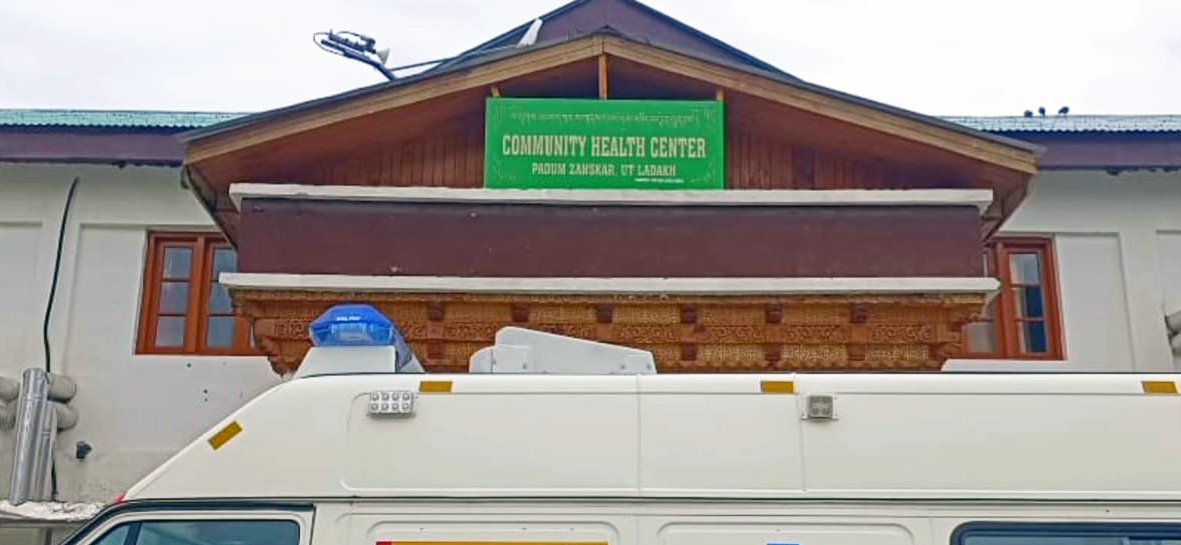
For the people of Zangskar, reaching a hospital is a challenge. Living in one of the most remote regions of Ladakh means that healthcare is not just about treatment, it is often a race against time. Sadly, despite being the only major government healthcare facility for the region, Community Health Centre, Padum (which now serves as District Hospital, Zangskar) continues to lack even the most basic medical facilities that every citizen deserves.
One of the most alarming issues is that the hospital’s ultrasound machine is not functioning. An ultrasound is not a luxury. It is an essential diagnostic tool used daily especially for pregnant women, emergency cases, abdominal pain, kidney disorders, and many other conditions. When this machine remains out of service, patients are forced to travel hundreds of kilometres simply to undergo a basic investigative test. In emergencies, this delay can be the difference between life and death.
Equally concerning is the absence of a full-time gynaecologist at the hospital. Pregnant women in Zangskar face immense hardships throughout their pregnancy. Regular antenatal check-ups, monitoring of high-risk pregnancies and emergency obstetric care become extremely difficult when there is no specialist available. Many expectant mothers are compelled to travel to Kargil or Leh, enduring long, exhausting, and often dangerous journeys over mountainous roads. During winter, when roads are blocked by heavy snowfall, the situation becomes even more critical.
The hospital also lacks CT scan and MRI facilities, making it impossible to diagnose serious conditions such as strokes, head injuries, internal bleeding, spinal disorders, and neurological diseases without referring patients elsewhere. Every referral means valuable time lost, additional financial burden on families, and increased risk to patients whose conditions may worsen during the journey.
Although doctors and healthcare workers in Padum work tirelessly under difficult circumstances, they cannot provide the level of care that patients deserve without adequate infrastructure and equipment. Their dedication alone cannot replace essential diagnostic machines and specialist doctors.
Healthcare is a fundamental right guaranteed to every citizen. Yet, the people of Zangskar continue to face inequalities simply because of their geographical location. Development should not stop at roads and buildings; it must also ensure access to quality healthcare.
It is important that the Administration of the Union Territory of Ladakh, the Health Department, and all concerned authorities take immediate action to:
– Repair or replace the non-functional ultrasound machine without further delay.
– Appoint a permanent gynaecologist at District Hospital, Zangskar.
– Establish CT scan and MRI facilities in Padum for timely diagnosis.
– Strengthen the hospital with specialist doctors, trained technicians, and adequate medical staff.
The people of Zangskar are not asking for luxury. They are asking for basic healthcare facilities that every district hospital should provide. No pregnant woman should have to travel for hours to meet a specialist. No critically ill patient should lose precious time because essential diagnostic services are unavailable. As a daughter of Zangskar, it is heart-breaking to witness families living with the constant fear that a medical emergency may require an exhausting journey. The resilience of our people is remarkable, but resilience should never be used as a substitute for proper healthcare. It is time for the voices from Zangskar to be heard. We hope this appeal reaches those who have the power to bring meaningful change, because every life in Zangskar is valuable, and every citizen deserves timely, safe, and dignified medical care.
By Obida Akbar
Obida Akbar (Padum) completed her BSc with Honours in Biochemistry from Panjab University, Chandigarh.