On the night of 23 March, Prime Minister Modi abruptly announced the nationwide lockdown for 21 days. At the time, I was in a village about 50 km from Leh and was worried about returning home. I can’t even start to imagine the feeling of people I see on the news who are walking 700 km with their children on their shoulders.
There was also a tinge of nostalgia when I heard the announcement. It reminded me of 8 November, 2016 when the Prime Minister announced demonetisation in a similar manner. He is known for his bold decision-making and this was the boldest of them all.
Many have praised him for this move and rightly so. A lockdown is the only known strategy to contain the pandemic. Everyone is trying to ‘flatten the curve’ and practising social distancing to counter the spread of the virus. However, I cannot help but wonder if a country like India can afford such a lockdown at such a short notice. Is it only delaying the spread of the virus?
One of the main factorsis our economy that has been in shambles even before this crisis. The economic growth rate had fallen to4.7% in the last quarter, which is the lowest it has been in the last six years. Itis expected to fall another 2.4% in the next quarter (January to March),and to make matters worse, there are reports that we are likely to increase our borrowing for 2020-2021 to INR 7.8 trillion with Reserve Bank of India directly buying these bonds. Our fiscal deficit has increased to 7.5%, which is more than Vietnam (4.4%) and Bangladesh (4.8%).
In all of this, it is the floating population of migrant labourers that are worst affected. These are workers in the informal sectors in our country who roughly make up about 80% of the total workforce. Of this, 8.8 million of the household are scattered across congested urban slums with an average income of INR 150 rupees per day.
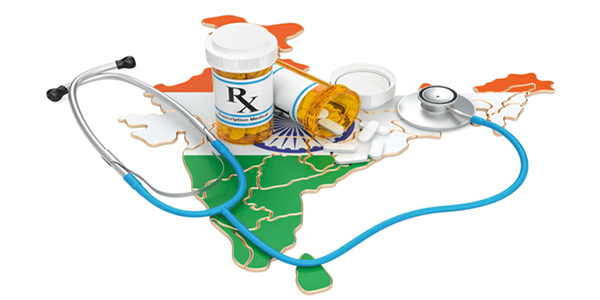
According to a report published by World Health Organisation in 2016, India spent about INR 4,500 per person on health care, whichis six times less than what China spends. Our public health expenditure is about 1.2% to 1.6% of India’s total GDP between 2008-09 and 2019-2020, which is about USD 9.7 billion compared to USD 66.7 billion that India spends on defence. Budgetary allocation for healthcare and related research is so poor in India that 97% of this budget is directly allocated to the Department of Health and Family Welfare. In contrast, governing establishments such as the Indian Council for Medical Research (ICMR) received only 3% (INR 21,000 million) of the medical budget in the 2020-2021 financial year and according to national health profile of 2019, the per capita of the public health expenditure was INR 1,657 in 2018-2019, which is three times lower than Indonesia and significantly lower than Sri Lanka.
I think our government takes solace in its historic successes such as eradication of smallpox. However, there are issues of concern such as the continued epidemic of tuberculosis in India for several years.WHO estimates that there are 2.8 million people in India who are affected by tuberculosis and the number continues to rise. Some 480,000 people die each year in India from tuberculosis, which works out to more than 1,300 per day. This number is significantly higher than the number of deaths occurring due to HIV/AIDs in South Africa. Though tuberculosis is less deadly than HIV/AIDS and remains curable, the Indian healthcare system is still struggling to cope with it. One of the main reasons for this shortcoming is that the healthcare system in India is spread thin across its vast population.
Dr Zarir Udwadia, a pulmonologist who researches drug-resistant tuberculosis, has stated in his 2010 study that many prescriptions given out in the small privatised sectors are inappropriate. He added that this contributes to amplifying the spread of drug-resistant tuberculosis and aids in strengthening the virus rather than killing it. Our fight against tuberculosis is nowhere near over and now diseases like COVID-19 have taken precedence. Can the healthcare system cope with this challenge?
We are currently in the midst of a pandemic. Our country already has the lowest rate of testing for COVID-19.Though it has a capacity of testing about 8,000 samples per day, the government was initially only testing around 90. This number has increased slightly very recently after the testing criteria was broadened to include people without travel history.
The first COVID-19-related death was reported on 11 March. It was a 76-year-old man from Karnataka, who was initially turned away by a private hospital due to his medical condition. His test results were received only after his death.
The concern over the lack of facilities provided by Government of India was expressed by Chhattisgarh Health Minister, T.S Singh Deo when he wrote to Union Health Minister Harsha Vardhan. In this letter he mentioned that only one centre was performing the tests and requested for more testing kits to scale up the testing. Kerala was an exception as it managed to expand its guidelines on testing to include a wider population much earlier than other states.
Dr S.P Kalantri, medical superintendent at Kasturba Hospital in central India, told Vox that he expects 55% of India’s total population to be infected with COVID-19. This is around 300 to 500 million individuals over the next four to five months with about one to two million deaths from it in a year. These are daunting numbers and reflect how our healthcare system is structured.
The Organisation for Economic Cooperation and Development reports that there are around 0.5 hospital beds for every 1,000 people in India. In comparison, Italy has 3.2 and China has 4.3.The National Health Profile, a compilation of all the data that India’s Ministry of Health Ministry has at his disposal, reports that India has a total of 11,54,68 registered allopathic doctors of which only 1,16,756 doctors are eligible to carry out current tests. This means that there is one doctor for every 10,926 individuals in India. WHO recommends a standard ratio of one doctor for every 1,000 individuals.In addition, a 2016 report by Reuters states that every country needs more than 50,000 critical-care specialists while India currently has 8,350.
We must also understand the manner in which our healthcare system is structured. The private sectoraccounts for about 70%, while the remaining is public sector. However, a very small percentage of our population can afford private health facilities. Now every Indian state is scrambling to acquire new beds, increase the capacity of their Intensive Care Units, life-saving ventilators and so on.
The proportion of doctors and infrastructure in relation to population in India’s largest states is rather alarming. Maharashtra,which is home to more than 126 million people, has 450 ventilators and 502 ICU beds in public hospitals.Chhattisgarh,which has a population of 32 million, has 150 ventilators and 25 specialists. Assam has 200 ventilators of which 36 are not functional and Telangana has 1,000. India Railways has pitched in and has prepared 7,000 beds and 500 ventilators in their hospitals across the country. There are an estimated 40,000 ventilators in the Indian inventory.
The Indian government has now released INR 15,000 crore to meet health expenditures. Interestingly, this is INR 5,000 crore short of budget for the Central Vista being developed in New Delhi. The latter project is meant to develop and beautify prominent buildings in Lutyens’ Delhi. The money allotted to meet health expenditures accounts for less than one percent of the country’s GDP, while countries like the UK, Spain and Germany have allotted around 20% of their GDP to meet these expenses.
It’s difficult to say how things will develop in the coming days and how our country will respond to these challenges, given the vulnerable state of our healthcare system. I hope we are able to contain the outbreak but that does seem like a far-fetched notion right now.
Writer and journalist, Vidya Krishnan has written an article in The Atlantic in which she describes the dire and frightening condition of the Indian healthcare system. She concludes with a reference to a quote by epidemiologist Ramanan Laxminarayan where he draws an analogy between a pandemic and a tsunami. “Imagine that you’re standing on the shore and you’re watching the tsunami come in. If you are going to just stand there, and watch the tsunami, you are finished. If you can run as fast as you can, you have a better chance.” Vidya Krishnan ends the article ominously by stating, “India is not running fast.” Here I would pose a question, “Is India even capable of running fast?”
By Tenzin Jamphel
Tenzin Jamphel co-founded the mountain-biking company, Unexplored Ladakh and holds a master’s degree in communication.