

Blind urbanisation and the issue of drug addiction

There is a lot of focus on drug addiction in Ladakh these days. Government agencies and NGOs are working hard to address it. Factors such as toxic family environment, poor parenting, peer pressure, and curiosity are often cited as causes. However, on deeper examination these are just the tip of the iceberg. The real causes lie much deeper in Ladakh’s ongoing social and economic transformation.

Ladakh’s traditional agrarian economy, once the backbone of its self-sustaining and close-knit society, has been rapidly crumbling as we shift to a tourism-driven economy. This has triggered widespread ‘blind urbanisation’ marked by large-scale migration from rural to urban centres in search of employment and educational opportunities.
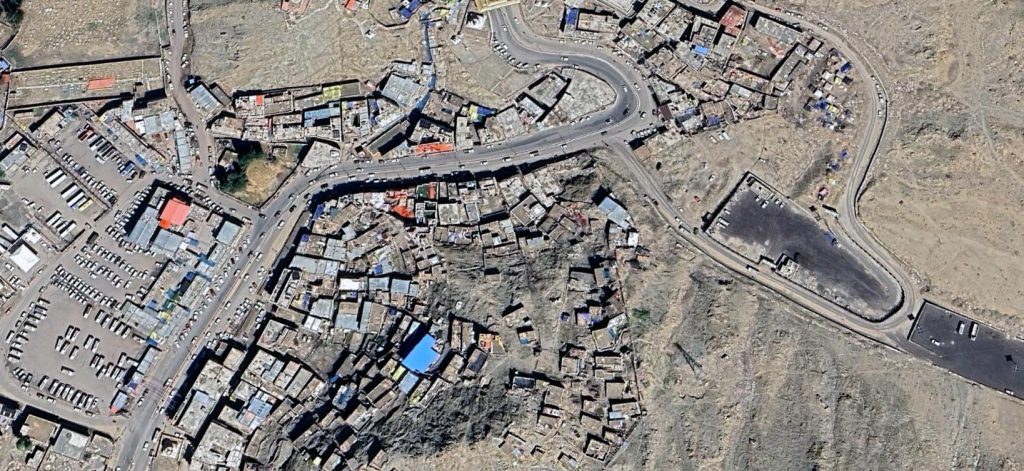
This satellite image of a part of Leh town illustrates unplanned urbanisation taking place in Ladakh (Image: Google Earth)

One glaring impact of the ‘blind urbanisation’ is a sharp class divide. Ladakh has moved from its communitarian culture to a competitive, individualistic, and increasingly materialistic rat race mentality. Relationships are becoming hollow with marriages being based on social status and wealth rather than compatibility and shared values.

The rapidly fading agrarian lifestyle is sustained largely by the elders in rural areas. They continue agro-pastoral practices not for profit but due to their deep attachment to it. The youth, however, are in a quandary. Agriculture is neither economically attractive nor practically feasible. After completing their education, many youth remain without stable employment, income, or a clear sense of direction. This lack of substantive career prospects has led to disillusionment among the youth. They are struggling to pull through in an increasingly urbanised and competitive environment. This reminds me of German philosopher Nietzsche’s quote, “Whoever fights monsters should see to it that in the process he does not become a monster. For when you look long into an abyss, the abyss looks also into you.” For frustrated youth, the abyss is gazing back. The disillusioned youth do not dare to guide the younger generation (Gen-Z).

The vulnerable youth of Gen-Z see a bleak future. They have grown up in a society where agriculture and self-sufficiency are no longer viable. Money is the only measure of success for many of these youth. When they don’t see legitimate and sustainable ways to achieve economic security, they feel frustrated and hopeless. Thus, many marginalised youth become disillusioned even before completing their schooling as they feel alienated from traditional values and modern opportunities. In this sense, that they are the first major victims of Ladakh’s ‘blind urbanisation.’ Other factors may trigger drug abuse but they are symptoms of deeper structural problems.

Unless we understand the larger picture, the situation is likely to deteriorate further. What we are witnessing today is merely the trailer rather than the full movie. Urgent efforts are required to strengthen educational institutions, sports facilities, and recreational centres in villages. Sustainable employment opportunities must be created in rural areas to enable youth to earn a livelihood while remaining connected to their families and communities. The benefits of tourism should not remain concentrated in Leh, Pangong-tso, Hunder, and Turtuk. It must be distributed more equitably across Ladakh with active support from the UT administration. The active promotion of homestays and community-based tourism in unexplored rural areas will spread economic opportunities and reduce migration pressures.

The UT administration’s experiment with ‘model schools’ has started producing encouraging results in a relatively short period. This needs to be expanded to create high quality schools in far-flung areas and enable students to access better educational opportunities without migrating. The recently established drug de-addiction centres and the Anti-Narcotics Task Force to combat the growing drug menace are commendable steps. However, all stakeholders must understand the deeper social, economic, and cultural dimensions to address this issue. Only a holistic approach that combines rural development, employment generation, educational reform, cultural preservation, mental health support, and community engagement can hope to tackle the root causes of addiction and safeguard Ladakh’s future.

By Stanzin Stamdin

Stanzin Stamdin is Assistant Professor at Government Degree College, Khaltse.
Siachen tourism will spell disaster

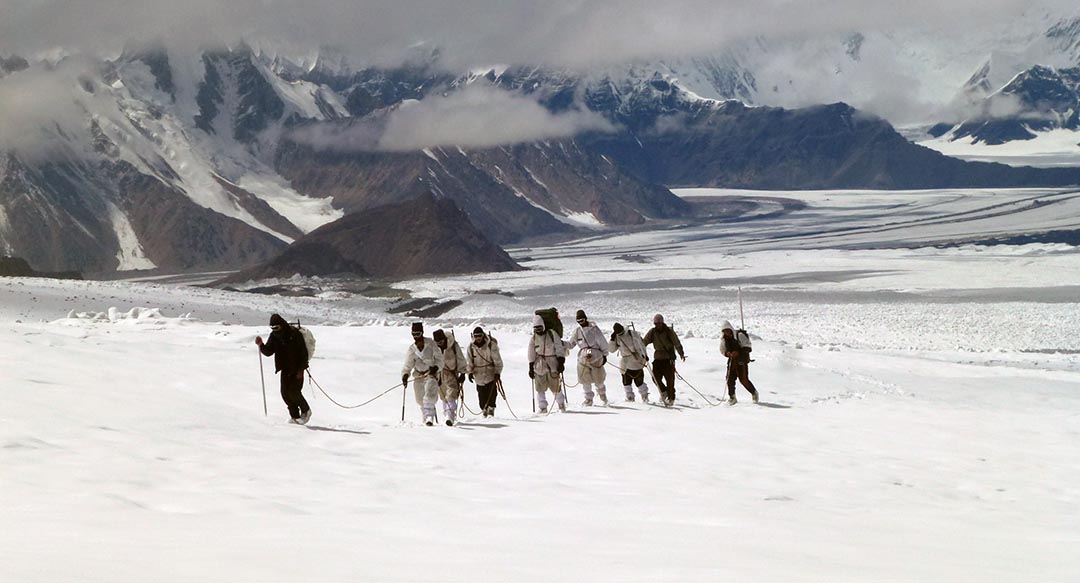
Consider this irony: On the one hand, Magsaysay awardee Sonam Wangchuk received the Rolex Award for his endeavour to address water scarcity in Ladakh through creation of artificial glaciers. On the other hand, the largest natural glacier outside the Polar Regions i.e. Siachen glacier was recently opened for tourist consumption by Government of India.

The tourism industry has emerged as Ladakh’s largest economic sector in recent times. The popular claim that a ‘majority’ of Ladakhis gain economic benefit from tourism remains contentious. There is no disputing the fact that the current form of tourism has had a negative impact on Ladakh’s ecology. Even now, there is no holistic approach to mitigating this issue. In addition, this form of tourism has also harmed the close-knit community in Ladakh and its culture.

Tourist inflow, especially domestic ones, is expected to increase significantly in the coming years as it has in the recent past. Ladakh has become a ‘Disney World’ for the Indian bourgeois. For the contemporary Indian bourgeois class, who love to travel to ‘consume’ a place, Ladakh represents an aspirational fantasy world that includes mysticism, romance, danger, magic, and now, the ‘world’s highest battle field’, the Siachen glacier.

The opening of Siachen glacier for tourism will further bolster Ladakh’s image as an ‘adventure’ and a ‘therapeutic’ destination. Ladakh’s political tycoons and emerging statesmen use very affective tones when commenting on opening Siachen glacier for tourists. This further entices tourists and makes them more curious about Ladakh. How can a tweet like this fail to kindle one’s imagination: “The Indian citizens should be able to witness the highest battlefield and experience the atmosphere which the armed forces endure every day” (emphasis added). This tweet is a heavily loaded text that not only invites domestic tourists to visit Siachen but also politicises it as a ‘nationalistic’ space. This raises many questions. For instance, is Siachen glacier going to be another ‘nationalistic space’ where citizens will go to show/prove their nationalism? Instead, Ladakh’s political custodians should have commented on the fragile ecology of Ladakh and tried to sensitise locals and tourists about the environmental challenges posed by tourism and security forces in the area.

The 72km-long Siachen glacier has already been polluted by the huge deployment of soldiers by India and Pakistan and this ‘new’ order of mass tourist consumption will wreck further environmental havoc. We must not forget that Siachen glacier is the main source of drinking and irrigation water for thousands of people in Nubra valley and beyond. Furthermore, the glacier also supports a rich diversity of biodiversity. According to data in the public domain there are around 20,000 Indian and Pakistani troops, in addition to about 1,000 local porters, stationed on Siachen glacier since 1984. The impact of such anthropocentric actions has been outlined in an article published by The Tribune. It quotes Maj. Gen. J.S. Dillion, former GOC of Siachen Division, who said, “Siachen is the world’s biggest and the highest garbage dump, from where nothing comes back.” The garbage mainly consists of plastic, remains of crashed helicopters, worn-out gun barrels, splinters from gun shelling, empty fuel barrels, burnt shelters, telephone wires, skid boards, para-dropping boards, edible oil containers, canisters, gunny bags, rotten vegetables, spoilt meat, expired tinned meat, cartons, wrappers, shoes, clothing, ration items etc. Items damaged or lost due to misjudged para-dropping add to this list as do human bodies that cannot be recovered.

The garbage turns into permanent pollutants as snowfall buries waste deeper in the ice. Romesh Bhattarcharji, an avid Indian trekker and mountaineer, has written in his book Ladakh: Changing, yet unchanged about the devastation of the glacier. He writes, “Only 20 years ago Siachen was 72km long. It is shorter today because of the heat generated by helicopters and diesel trucks and generators, dumped chemicals, plastics, garbage, human waste, and more than 1,000 litres of gas burnt to cook food on that poor hapless glacier”.

In spite of this, the administration has so far not adopted a strategy to salvage garbage from the glacier. One can easily imagine what we are going to do to the hapless glacier with this new state-sponsored mass-consumption diktat. We need to worry about the toxicity of the water that emerges from the glacier and is consumed by people. Dr. S.C Jain, Professor of Chemical Engineering at Punjab University says, “Plastic and metals are the most hazardous of solid wastes being littered at Siachen. The toxification begins the moment metals and plastic come in contact with water…Elements like cobalt, cadmium, chromium etc. have been confirmed in these toxins.” Despite this, nobody seems ready to confront these critical issues. Instead we are asked to believe that ‘vikas’ or ‘development’ has started with the opening of Siachen for tourists.

In addition to these challenges, human waste is also a major problem on Siachen. Human excreta remain on the glacier as there is no room for creating toilets, septic tanks or ways to collect such excreta. Also, given the extreme cold, human waste does not degenerate as it does at lower elevations. Humans are said to be the most intelligent animals on the planet. Then why are we giving the clean glacier heaps of human excrement in return for its priceless gifts?

We should have considered and discussed these issues before opening Siachen for tourism. These problems will only worsen now. Climate change is already melting glaciers and garbage accelerates this process. Water sources for local communities is already toxified and we are going to proliferate it further by such (in)decisions.

Unfortunately, the environmental havoc created by both armies has seldom been highlighted by environmentalists and administrators. Though tourism is a lucrative business in Ladakh today, we need to consider its impact on our environment. If we do not act on these issues now, the glacier will soon be reduced to a memory. The very survival of local communities and biodiversity is at stake. As mentioned earlier, tourism in Ladakh is only going to increase as contemporary tourists travel to consume places and improve their social status. Travel has now become a commodity in a highly commercialised culture and an important aspect of bourgeois life. The exoticised images of Ladakh have gained currency in the tourism discourse and attract even more consumers. Seeing this pattern of tourism, we are going to turn Saichen into a mass-tourist consumption site in no time with negative environmental and socio-cultural repercussions. We must act to save Siachen glacier before it turns into a nightmare. If we don’t raise our voices today, Ladakh will soon change beyond recognition.

By Stanzin Stamdin

Stanzin Stamdin (Nubra) teaches English at Government Higher Secondary School, Drass, Kargil.