
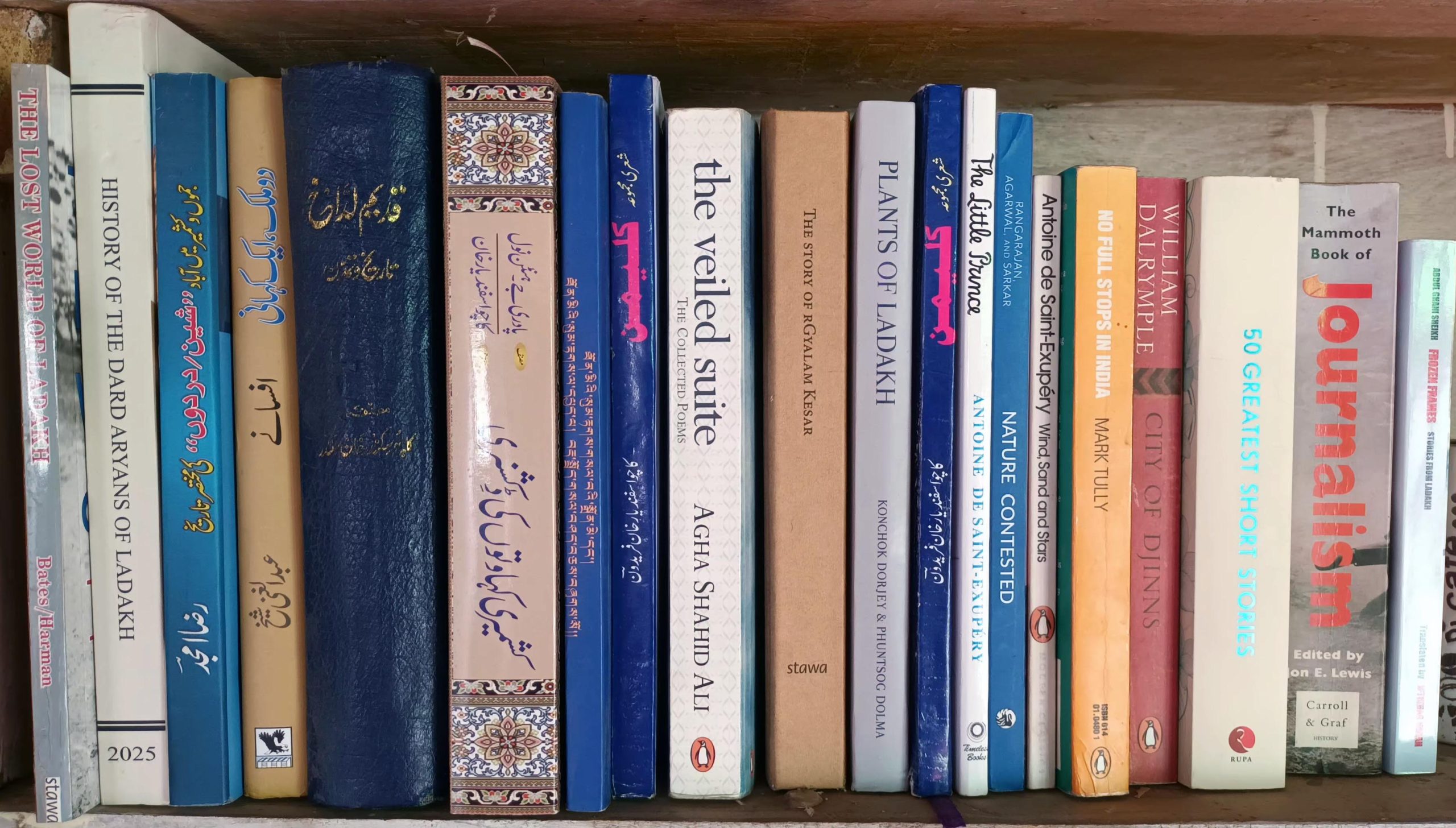
In this fast-moving age of artificial intelligence where machines can generate information in seconds, is there any need to read? I would say yes. Reading is crucial for regions like Ladakh where stories, culture, and values are still breathed through words across generations.
It is ironic that machines are now learning faster than ever and many humans are slowly abandoning the habit of learning. AI models are being trained on vast libraries of texts, images, and data, constantly evolving to understand patterns and generate responses. On the other hand, we spend our time scrolling endlessly on social media, absorbing half-truths and risk losing the depth that comes from focused learning. In this context, reading books becomes even more important. It slows us down in the best possible way, encourages reflection, and helps us think critically instead of reacting. While a machine may summarise a novel, it cannot feel the emotion of a character or understand the silence between lines. Emotional and intellectual engagement is what makes reading truly human.
My journey with reading began like most school students through textbooks and storybooks. I remember reading Tinkle during school and it gave me access to colourful worlds, simple values, and the joy of learning beyond marks. Back then, reading still felt like something I had to do but not something I loved.
This changed during the COVID-19 lockdown in 2020. With no classes to attend offline and limited access to the internet, I turned to books. This time, it was not an academic obligation but a door to understanding the world and myself. I read Sapiens by Yuval Noah Harari, a book that shook me from within. It was about how stories, myths, and shared beliefs shape civilisations. This helped me understand that Ladakhi folklore and oral traditions are knowledge systems that must be preserved.
Over the years, I realised that most of the people I admired shared one common habit: they were readers. They didn’t always speak about their knowledge, but their words carried depth, and their actions showed clarity. Be it a monk quoting ancient scriptures or a teacher guiding us with stories from books, their wisdom was rooted in consistent reading. I started observing how readers often are more empathetic and have better control over their emotions. It made me realise that reading shapes character.
One of my earliest memories of being curious is from school library periods when I discovered the Tell Me Why series. These colourful books with simple questions and answers opened a new world for me from ‘Why do stars twinkle?’ to ‘How do volcanoes erupt?’ each page sparked a new question in my mind. It wasn’t about marks but about wonder. The habit of asking ‘why’ stayed with me from the time I sat cross-legged on the cold floor of our school library.
Fiction, more than any other form of reading, holds the key to reviving our fading imagination. In today’s world of quick content, our ability to visualise, empathise, and dream is eroding fast. Fiction arrests this decline as it invites us to live a thousand lives, to look through the eyes of people we have never met, and explore worlds that don’t exist. Some of the wisest minds in history chose to express their ideas through fiction. There’s a vast difference between reading a dry account of World War I and feel the mud, fear, and silence of a soldier in the trenches through a novel. Fiction doesn’t just tell us what happened it makes us feel why it mattered. In an age where machines can mimic facts, keeping our imagination alive may be our greatest strength.
As I stepped outside Ladakh for studies, I realised how much reading had prepared me. While others struggled to articulate their ideas or connect concepts, I could draw from books. Words are more than just information, they were weapons of thought.
To young readers today, I would say: Read to open your mind. Start with something that excites you, be it a comic or novel and let your curiosity lead the way. Each book plants a seed of imagination, a question, and a new perspective. Unlike scrolling on a screen, reading builds your inner voice, helps you think deeper, and imagine alternatives. Reading is the gym for your brain! Reading is also resistance. In a world flooded with viral reels and short attention spans, the act of sitting with a book is revolutionary.
by Rigzin Angchuk
Rigzin Angchuk is pursuing engineering from Punjab University, Chandigarh.