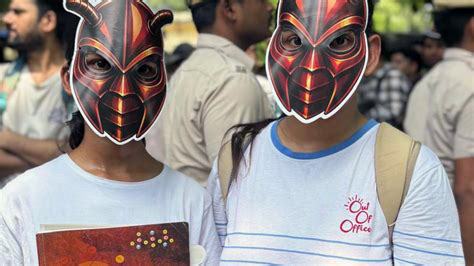
Few youth-led protest movements in recent India have been as original as the Cockroach Janta Party (CJP). By reclaiming the word ‘cockroach’, originally used as an insult, it transformed ridicule into resistance. It began as an online expression of anger and quickly became a symbol of frustration over examination paper leaks, student suicides, and the growing loss of confidence in India’s education system.
Its appeal lay in its clarity. The message was simple: India’s students had been failed by the institutions responsible for safeguarding merit and fairness. The campaign was de-centralised, youth-led, and sharply focused. For a brief period, it compelled the country to pay attention.
CJP’s demands were concrete: The resignation of the then Education Minister, Dharmendra Pradhan and a five-point charter calling for an independent examination authority, mandatory judicial inquiry into each paper leak, automatic student compensation, free re-examinations, and parliamentary oversight of examination bodies. These were substantial institutional reforms and not just expressions of public anger. That clarity, however, gradually weakened.
The first challenge was the gap between online popularity and organisational strength.
The first challenge was the gap between online popularity and organisational strength. CJP generated enormous engagement on social media but viral reach does not sustain a protest. Lasting public pressure requires local organisation, sustained advocacy, legal action, and disciplined leadership. Digital momentum is valuable but it is rarely enough on its own.
The second, and perhaps more consequential, strategic shift came when CJP became associated with Sonam Wangchuk. His stature brought greater visibility but also shifted the campaign’s centre of gravity. Few would dispute his contributions to education and environmental advocacy. Yet, CJP was never intended to be another personality-driven campaign. It was conceived as a youth movement demanding accountability.
Around the same time, the campaign’s agenda also broadened. The hunger strike came to encompass Ladakh’s constitutional demands alongside students’ grievances. Both causes are important but they addressed different questions and constituencies. One sought accountability for failures in India’s education system; the other concerned Ladakh’s future. Bringing both under a single campaign made the public message less focused and risked diluting their political force.
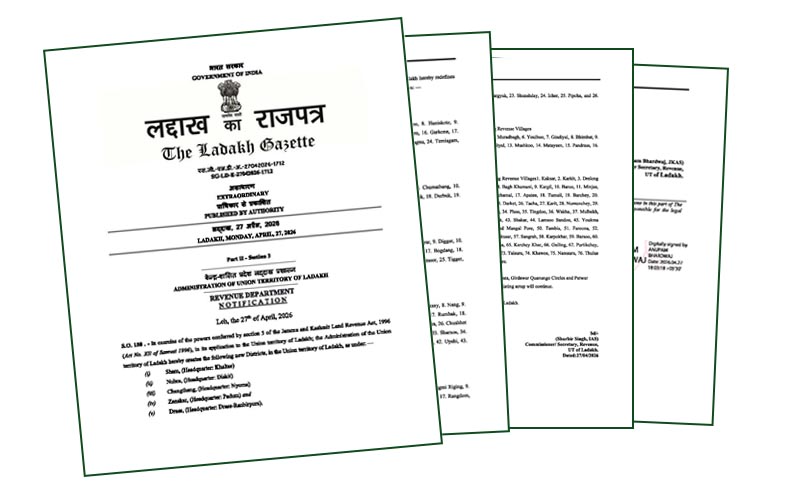
While Wangchuk remained on an indefinite fast in Delhi, the UT administration proposed extension of the LAHDC framework to all districts in the region. This appeared to be a significant democratic and administrative development, and many initially welcomed it. But did it address the constitutional aspirations that Ladakh has been demanding?
Meaningful public debate on this issue never gathered the momentum its constitutional significance warranted. As Wangchuk’s health became the dominant public concern, much of Ladakh’s attention shifted to daily updates on his condition. The proposal to extend Hill Councils consequently received far less scrutiny. In effect, attempting to carry two distinct causes simultaneously weakened public conversations around both. The national debate on education reforms faded behind the hunger strike, while Ladakh’s constitutional debate was overshadowed by concern over the health of the movement’s prominent public figure.
From a strategic perspective, an indefinite fast by a nearly 60-year-old activist was inherently risky. As the fast continued, media coverage centred on Wangchuk’s health rather than the institutional reforms that had inspired the protest. Public attention gradually shifted from examination reform to the unfolding human drama surrounding the fast.
Public attention gradually shifted from examination reform to the unfolding human drama surrounding the fast.
Many observers claimed that the campaign had become centred on its principal public figure rather than the concerns of India’s students. Whether or not this perception was justified, its practical consequence was clear. The spotlight drifted away from the institutions whose accountability CJP had sought to secure. The campaign that began by defending merit increasingly risked being defined by its messaging. The messenger had become the message. This was CJP’s central strategic challenge. Its demands did not lose relevance. The public conversation surrounding them changed.
That distinction matters. Public attention is a finite resource. When it shifts from institutions to personalities, movements often lose leverage. Modern protest campaigns succeed when they keep sustained pressure on the institutions they seek to influence. They become less effective when attention drifts elsewhere. Governments do not always need to suppress protests directly. Sometimes delay, media fatigue, and changing public narratives are enough to ease the pressure.
None of this diminishes the legitimacy of students’ concerns, Ladakh’s constitutional aspirations, or Sonam Wangchuk’s public service. It is an observation about strategy. Successful campaigns depend on moral conviction as well as disciplined messaging and sustained focus.
Despite these challenges, CJP demonstrated that it still possessed considerable mobilising power. The 20 July Sansad Chalo march became its strongest display of public support. Given the relatively modest turnout at earlier protests, the scale of participation in Delhi exceeded expectations. The government’s decision to engage with the campaign demonstrated that it had once again generated sufficient political pressure to command official attention.
While the discussions resulted in written assurances on immediate issues including protection of peaceful protesters, examination reforms, and compensation for affected families, they stopped short of delivering the structural reforms that CJP had originally sought. The campaign had regained visibility, but its principal objective remained unresolved.
The events that followed the march illustrated the campaign’s reach and its structural weaknesses. When Sonam Wangchuk eventually ended his 26-day fast, no CJP representatives were present. Instead, Union Ministers J. P. Nadda and Dr Jitendra Singh and senior leaders from Ladakh attended the meeting.
The symbolism was unmistakable. A campaign that had begun as a youth-led movement demanding accountability in India’s education system reached one of its defining moments without the presence of its leadership. CJP’s voice appeared to have been overshadowed by regional organisations and prominent personalities. More importantly, the campaign’s principal objective, systemic accountability and durable reform of India’s examination systems, remained unfulfilled. The negotiations that marked the end of the fast reinforced this shift.
In subsequent interviews, Wangchuk explained that he had wanted CJP leaders and MPs of different political parties to be present when he ended his fast. He said that this did not materialise as the ministers arrived after midnight, and images of the event were released before the broader gathering he had envisaged could take place. He nevertheless proceeded to end the fast with the Union Ministers and Ladakhi leaders. He also revealed that during the final negotiations, the demand for the Education Minister’s resignation had become secondary. His immediate priority was to secure assurances that peaceful CJP protesters would not face legal action. Thus, the campaign’s broader programme of reform gave way to the immediate objective of protecting its student volunteers.
The political landscape shifted again with the subsequent resignation of Union Education Minister, Dharmendra Pradhan. For CJP, this marked a major symbolic victory. It fulfilled its most visible political demand and demonstrated that sustained public mobilisation can generate sufficient pressure to secure ministerial accountability. It also marked the beginning of a more difficult phase.
The resignation achieved CJP’s most prominent political demand, but it did not deliver the broader programme of institutional reforms that had originally inspired the protests. The real question now is whether the campaign can convert that political success into lasting institutional change.
CJP has already demonstrated that it can generate sufficient political pressure to secure ministerial accountability. Its greater challenge is to transform that victory into durable reform without losing the clarity of purpose that first inspired its supporters.
A movement succeeds when its cause remains larger than its champions. The moment the messenger becomes the message, it risks losing sight of the institutions it set out to change.
A movement succeeds when its cause remains larger than its champions. The moment the messenger becomes the message, it risks losing sight of the institutions it set out to change. What began as a campaign to defend merit should ultimately be remembered not for the personalities who came to define it, but for the institutional reforms it helped achieve. History rarely remembers protests for the ministers they unseat; it remembers them for the institutions they transform.
By Phuntsog Tsering
Phuntsog Tsering is an entrepreneur from Leh and manages Migsal WoodWorks.