Open letter to Gen Z

My dear Gen Z,

I am indebted to you, today. What you have done has no parallels to what my generation, the Gen X, has ever achieved. You have ignited the soul of India, the world’s oldest and largest democracy. You have awakened a nation, long in slumber. You have consecrated the conscience of our country, defiled with blind faith, greed and selfishness.

So, thank you.

While you have been at the receiving end, I witnessed the beginning of this age when it all started, when this evil began to first breathe and held our nation bewitched for so long. Ah! I was of your age then.

Our nation painstakingly built what our constitution stands for. Democracy, secularism, and individual rights, of these ideals our land was a crucible from time immemorial. Think of Vedanta, of Tripitakas, and many philosophical/spiritual traditions of the ‘argumentative Indians’ fame. We produced inexhaustible, comprehensive and intricate thoughts on polity, social mores and personal liberation. Yet, I saw it all dismantled. I witnessed these magnificent edifices crumble one by one when the thicket of ignorance, blinding faith and gluttony began to set in on 1.8 billion.

My generation, Gen X, was stupefied when glitters of ‘development’ shone on our eyes. We stood dazed for decades, gagged with irrationality. Many of us are in torpor of complacency still. And, here you are, my dear Gen Z, taking on the mantle for us and our children.

So, thank you.

Finally, as your elder brother, I have this to say. It is not about the evil pawns, but the current that generated their motley cohort. Believe me, most of them are riding the wave. As soon as it turns, so shall many decamp. You see, it is inherent to cowards, opportunists and the compromised.

My dear Gen Z. You rave. You make merry of your youth. You explore. All the yardsticks of yesteryears have rotten. You be the rebel who dictates your own terms. You dissent, resist and invent. You be Gen Z.

And, for taking on the baton that laid forsaken for so long. Thank you, once again.

Your brother in gratitude,

Lhundup Gyalpo

Lhundup Gyalpo is the author of Bettys Butter Tea – Stories from Ladakh.

Pal and Zin: A reflection on Bhoti/Ladakhi language

This edition of Stawa was supposed to contain the twelfth episode of the serialised story. Instead, I am writing a reflection on it. Readers, I apologise for the interlude. The episodes of Pal and Zin tale are piecemeal in scope. Nevertheless, this article marks a year-long engagement between Dr Thupstan Norboo, Stawa, and me. Therefore, it felt fitting to relate the story behind its origin and writing about the process so far.

The genesis of the bilingual serialised fiction could be traced back to a conversation between Editor of Stawa, Sunetro Ghosal, and me about Bhoti/Ladakhi/Tibetan language. We discussed many facets of the language, including its dwindling fortune, seeming irrelevance in an increasing mono-cultural and mono-lingual world and blatant policy jinx. The rampant linguistic and cultural purge in Tibet and seemingly benign and yet chronic political apathy in India are only hastening its inevitable extinction. Nevertheless, the hour-long peripatetic exchange brought to the fore the dearth of fiction or literature in Bhoti/Ladakhi language. A jarring gap, we realised, could be addressed at our station instead of lamenting over its dismal situation.

The Tibetan plateau, the linguistic fountainhead of Bhoti language, culturally gave precedence to philosophical undertakings through a concerted royal patronage during historical times and spiritual reverence of the populace, in general—a collective choice that effectively relegated Bhoti literature to a lesser kind. In effect, the corpus of literature in Bhoti is largely philosophical in content with a typical terminology that is technical and specific, firmly embedded into the structural mores of Buddhism. The monolithic set of philosophical vocabulary, thus, serves the purpose of thought well, but not so much when it comes to the evolution of the language.

Akin to any other language, Bhoti is inherently fluid and amorphous incorporating a multitude of human experiences beyond the concerns of a marshalled philosophy. Yet, it lacks a literary platform, in terms of production and consumption, where those experiences could be experimented, exercised and expressed, facilitating a dynamic lexicon accrual in keeping with the changing world. Consequently, in the shared memory of Tibet and contiguous regions abutting the Himalayas, serious written works of fiction in Bhoti is sparse, save a few recent publications from Library of Tibetan Works and Archives, Dharamsala, India and Kham region of Tibet, which emanated during an ephemeral cultural revival period beginning the 1980s, under the vigilant watch of Chinese Communist Party.

Understandably, the existential threat for Bhoti is not peculiar to Ladakh. The larger Tibetan community, in exile or otherwise, is also reeling in its wake. Yet, Bhoti literature, the bedrock for the language, is still a second thought in the social consciousness of its linguistic demography despite its conspicuous absence and the central role it could play in its survival, though, the odds of which is fretting away each passing day. It is in this backdrop ‘Pal and Zin’ was conceived and written. The narrative is addressed to children in the hope of attracting young minds, but more so to keep the complexities of its language, plot and translation to its bare minimum.

As the reader is aware, each episode of the serialised narrative is published in English and Bhoti/Ladakhi, and the latter comes with an appendage of word-meaning section. While a language is multi-faceted with aspects such as syntax, style, voice and so on, this article primarily concerns itself with vocabulary. The idea is to accentuate the nature of language through the admixture of words that Bhoti/Ladakhi acquired over a prolong exposure to a potpourri of cultures, languages and ideas criss-crossing Ladakh. 

Most of Bhoti/Ladakhi language words have their origins in native language drawn from pre-historic Trans Himalayan linguistic roots. Before Thonmi Sambhota codified it in the Seventh Century CE, the Tibet plateau (Zang Zung) spoke the language for centuries. It also acquired words and expressions from foreign languages such as Chinese, Kashmiri, Arabic, and Persian. These indigenised foreign terms are yet to find their place in its lexicon. In this regard, etymological research could prove an effective contribution towards Bhoti/Ladakhi development.

The list of Bhoti/Ladakhi terms discussed so far in the story includes words that are familiar in the written form of the language; some have their secondary or tertiary meanings faded away due to disuse; those which have been forgotten in spoken language altogether and have been replaced by unassimilated loanwords from languages such as Hindi, Urdu and English; colloquial words have firm roots in the written language albeit with pronunciation alterations; those which are purely spoken; and new words that were devised by me using portmanteaus. In fact, many of the names of the characters have been inspired from blends, such as Skardha (a blend of Skar: star and Dha: arrow), Gothgyal (Goth: vulture + Gyal: king) and Dojom (Dud: evil + Jom: subdue), revealing aspects of the characters such as their species, personality, role in the story and so on. Blend words, therefore, play a prominent role in Bhoti language in creative expression, linguistic efficiency and, importantly, in invention of new words. This demonstrates the inherent flexibility and adaptability of Bhoti/Ladakhi language, which is a tool that is enriched and receives a renewed lease of life when we start exploring its potential for expression.

Bhoti was a phonetic language that has increasingly deviated from its original makeup. In its spoken form, the language has various pronunciation schemes prevalent across the Tibetan plateau. As we move eastward from Baltistan to Central Tibet, diglossia becomes pronounced. Even in Ladakh, we have a rainbow of dialects. Some of them still retain the puritan sounds, where some communities pronounce words true to their written forms, as in Kargili/Purgi dialect. In central Ladakh, it begins to metamorphose, while the Changthang region in the east uses a diglossic form of the language. The word-meaning section of Pal and Zin also discusses some words that have undergone different degrees of phonetic transformation. It is pertinent to stress that Bhoti/Ladakhi language needs a phonetic transcription system that could account for such a diverse set of its dialectic variations and would go a long way in unifying the language.

Finally, the role of literature cannot be over emphasised in preserving and promoting a language. It is an open secret that spoken language is learnt through listening, while written through reading. Without either of them, a language is rendered incomplete and destined to die. Think of the prominent languages of the world such as English, French, Chinese, Spanish, Hindi, Urdu, Bengali, Assamese etc.; they all have a rich literary traditions. Literature is a necessary condition, if not a sufficient condition, for a language to flourish. Bhoti/Ladakhi language, therefore, needs a body of serious literature that is drawn on mundane experiences and narratives as it has done extensively with esoteric and analytical realms. I hope, this small experiment with Pal and Zin not only provides a source of entertainment and occasional inspiration, but also initiates a conversation on Bhoti/Ladakhi language and its practices.

By Lhundup Gyalpo

Lhundup Gyalpo is the author of Betty’s Butter Tea – Stories from Ladakh.

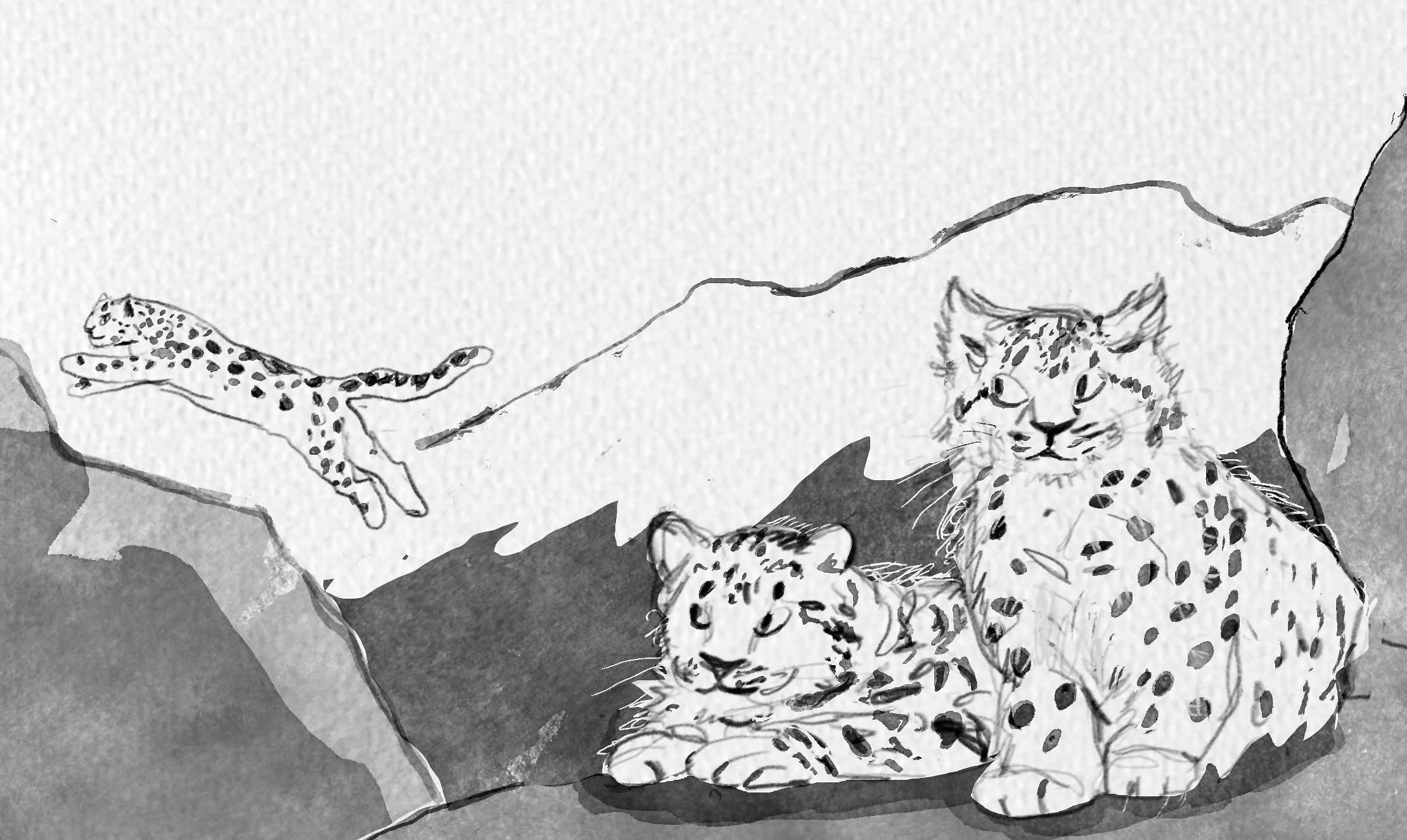
Sketch by Tsetan Angmo

Tsetan Angmo is a visual artist, a passionate illustrator and an animator with a flair for bringing characters to life through motion with a keen love for storytelling.

The Piprahwa relics of the Buddha

The Piprahwa relics of the Buddha, including an assortment of 1,800 exquisite jewellery and gemstone offerings, have undergone an extraordinary journey. After the Mahaparinirvana of the Buddha in Kushinagar circa 483 BCE, his remains were divided among eight kingdoms, including the Buddha’s Sakya clan of Kapilavastu. Brahmin Dona, who mediated the relic distribution, kept the urn used to collect the relics after his cremation while Moriyas received the ashes from the pyre. The recipients, in turn, built stupas enshrining them. After 250 years, Emperor Ashoka opened nine of the original stupas and redistributed them across his vast kingdom. This led to establishment of countless stupas, monasteries and communities across south Asia. He also sent missionaries to Sri Lanka, Central Asia and Greece, which marked an inflection point for Buddhism.

At the turn of the 20th Century, archaeologists found a stone pillar of Emperor Ashoka in the Terai region of Nepal. This helped them locate Lumbini; the birthplace of the Buddha. That breakthrough sparked a series of related discoveries in adjacent regions along the India-Nepal border. The area between Kapilavastu and Lumbini has many hillock-type mounds (locally known as Kots) incongruous to the geomorphology of the Gangetic plain. The archaeologists inferred that these were human-made structures. Buddhist scriptures mention a mass killing of the Sakya Clan by a rival king and experts surmised the Kots to be stupas or burial mounds associated with this event. Acting on the prevailing excitement, William Claxton Peppé, an engineer and landowner, grew curious about a similar nondescript mound on his estate in Piprahwa in present-day Uttar Pradesh, India.

In 1898, Peppé dug through the knoll in Piprahwa in the Birdpur estate, which locals associated with ancient ruins. He excavated a large sandstone casket containing five reliquary urns. One of the vases stood out for a peculiar inscription in Brahmi Script. Linguists interpreted the writing as, “This shrine for relics of the Buddha, the August One, is that of the Sakya’s, the brethren of the Distinguished One, in association with their sisters, and with their children and their wives.” The discovery helped ascertain the location of Kapilavastu, where the Buddha lived for the first 29 years of his life. This affirmed the historical Buddha, which sent ripples through the academic and spiritual worlds of the time.

These findings were further corroborated when Archaeological Survey of India (ASI) carried out an extensive excavation of the Piprahwa Stupa and adjoining areas between 1971 and 1977. Led by K. M Srivastava, the team found two more caskets with 22 bone fragments. Those were dated to the Fifth-Fourth Century BCE, coinciding with the latter half of the Buddha’s life. Moreover, their placement matched with the ritualistic burial patterns of the Sakya Clan. Crucially, they exhumed a large number of terracotta monastic seals explicitly mentioning ‘Kapilavastu Bikshu Sangha’ of Devaputra Vihara, a monastery named after the Kushana King Kanishka I (c. 78-102 CE). Srivastava’s team also located massive residential structures and a palace complex, about 1 km from Piprahwa. Considered as the administrative and residential heart of the Sakya Kingdom, the ruins revealed a sophisticated urban settlement with noteworthy advanced drainage system and water wells.

ASI concluded that the Piprahwa Stupa was built in three phases. The Sakya of Kapilavastu built the original structure c. 480 BCE, adhering to the Buddha’s instructions as ‘heaped up as rice is heaped in an alms bowl.’ Thus, the core of the stupa was no more than an earthen heap, enshrining the Buddha’s relics at its base. The part that W. C Peppé excavated was the second phase of its development. The structure was reinforced with baked red-bricks made with rice and straw that were prevalent in the Ashokan period. The third phase is dated during the Kushana era, 250 years after Ashoka’s reign. In this phase, the height of the stupa was raised and the base was squared-off.

The collection found in 1898 was promptly handed over to the Government of British India under the Indian Treasure Trove Act, 1878. The bones and ashes were gifted to King Rama V of Thailand. The famed urn with the inscription, along with other vases and the sandstone casket, and a majority of the precious jewels were placed in the Indian Museum, Kolkata. As the finder’s reward, Peppé was allowed to keep a fifth of the treasure. In 2025, his descendants decided to auction their share of the Piprahwa relics at Sotheby’s in Hong Kong. Speaking to the BBC, Chris Peppé, great-grandson of W.C Peppé, felt it was the “fairest and most transparent way” to return the relics to Buddhists. The assortment of precious stones was valued at over HK$ 100 million (£9.7m).

The private auction of the collection immediately sparked an international outcry. After intense negotiations, India successfully brought them back, thus setting a precedent for the return of antiquities taken during colonialism. It sparked a global repatriation debate and brought the Piprahwa relics into limelight, igniting public imagination about them once again. The whole of the Piprahwa relics and artefacts were placed under a single roof at an exposition called ‘The Light & Lotus: Relics of the Awakened One’ at Rai Pithora Cultural Complex in New Delhi in 2026.

The Piprahwa relics are among the most significant archaeological and spiritual discoveries in Buddhist history. Considered to be one-eighth share of Buddha’s remains that was entrusted to his clan, the relics provide direct physical and epigraphical evidence of the historical Buddha Sakyamuni. These relics are also referred to as the Holy Relics of Tathāgata, which is a Pali and Sanskrit term meaning ‘one who has thus gone’. It signifies an enlightened one who has attained perfection, understands reality as-it-is, and transcends the cycle of rebirth.

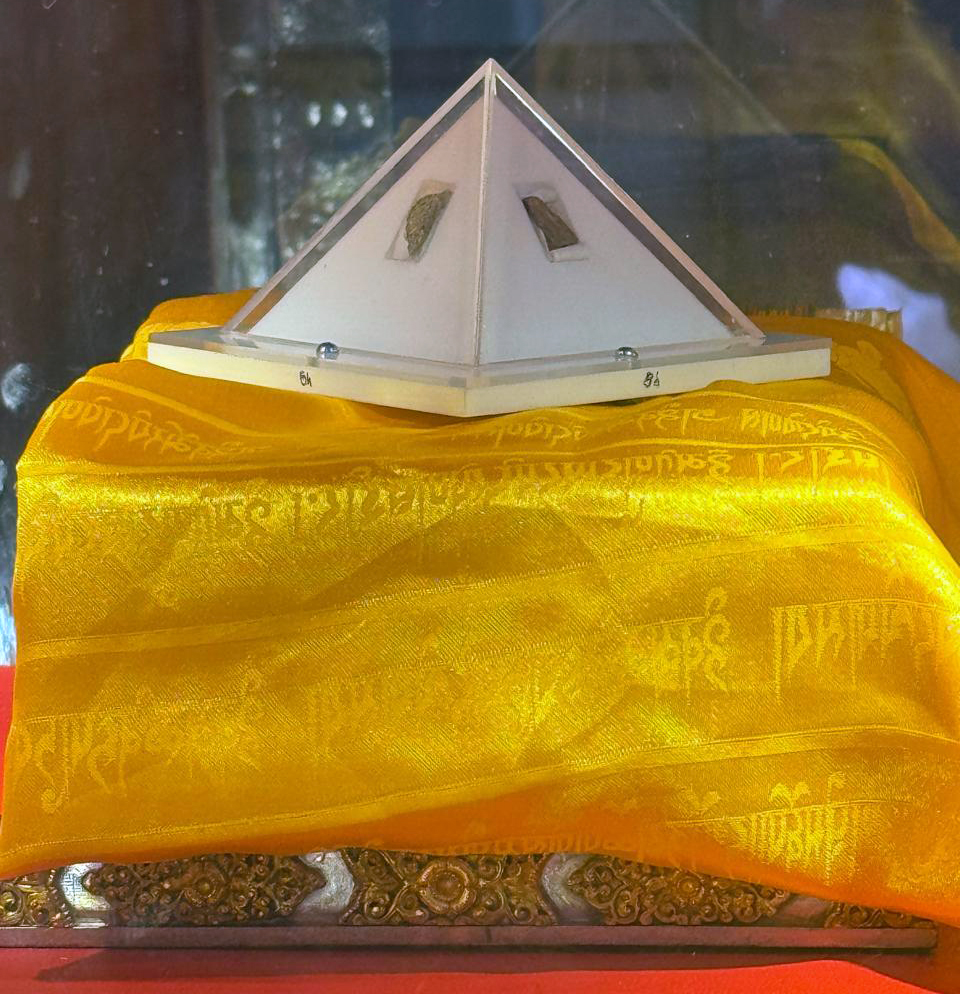
On 29 April, 2026, Ladakh witnessed a once-in-a-lifetime spiritual event when the remains of the historical Buddha blessed the land. The auspicious Piprahwa relics of the Awakened One descended at Kushok Bakula Rinpoche Airport with people lining up along the road to pay their respect and express spiritual devotion. From the Himalayas, the remains of the Buddha will bless the world with its message of reason, compassion and universal brotherhood. The Piprahwa relics will remain in Ladakh from 1 to 14 May, 2026 allowing people to experience their blessed presence.

Text by Lhundup Gyalpo

Photograph by Jigmet Takpa

Lhundup Gyalpo is the author of Betty’s Butter Tea – Stories from Ladakh.

Jigmet Takpa, IFS is former Principal Chief Conservator of Forest, Ladakh and currently serving as Nodal Officer for Sacred Exposition of Holy relics of Tathāgata Buddha, Administration of Union Territory of Ladakh.