
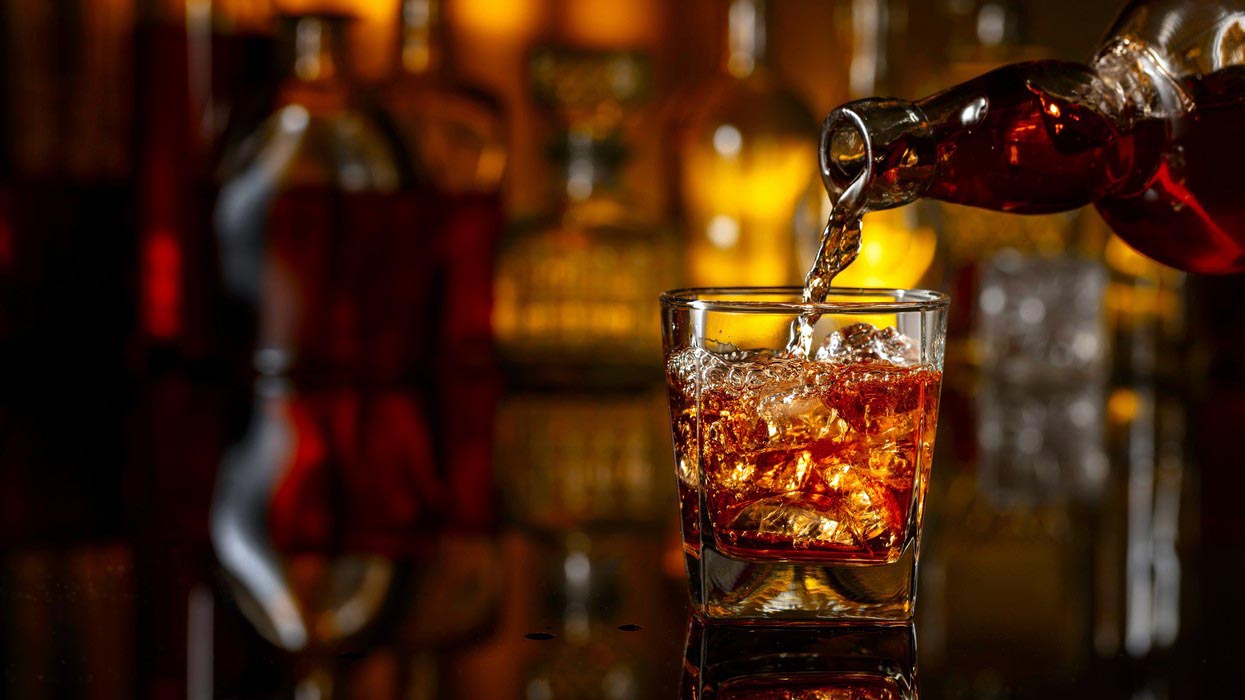
Ladakh was once known for its spiritual depth and meaningful celebrations. It is now slowly drifting toward a culture of mindless partying. Where there was tradition, connection, and joy, we now have alcohol-driven and mindless events. This includes celebrations for birthdays, work promotions, college or school reunions, marriage ceremonies, or even heartbreak or failure. Alcohol has somehow become central to these gatherings. Thus, parties are now synonymous with alcohol. Since when did we start believing that alcohol equals joy or celebration?
The truth is, it doesn’t. We often hear people using universal justification, “We only have one life, and we should try everything at least once.”
That one glass of beer, that first sip taken out of curiosity or due to social pressure, is where it all begins. What seems like a harmless moment often becomes a habit. By the time you realise the harm it is causing, you’re already trapped. It is disheartening to see school and college-going students believing that drinking is a sign of maturity or a sign that they are part of a ‘fun’ group.
Many youth are pressured to drink alcohol to prove their loyalty to their friends and to avoid being labelled as a “boring girl or mama’s boy.” However, true friends do not force you to pick up a glass. If you are being accepted only if consume alcohol, then it is time for you to question your social circle.
Celebrations are meant to create memories and not a hangover. They are a chance to reconnect with friends, laugh, sing, dance, and share life. Sometimes, someone in the group might be silently struggling emotionally or financially. Your time and presence could make a difference. However, when alcohol takes over, you miss those moments. What could have been a beautiful memory turns into regrets the next morning as you do not remember what you had said, how you behaved, or why you drank. There is nothing to boast in the number of beer bottles you drank last night at a gathering. It is in-fact rather embarrassing.
To those who feel pressured.
Alcohol doesn’t just change your behaviour, it hijacks your consciousness and the scariest part is, you don’t even realise what you are missing. It might seem like a temporary escape, but the truth is, it’s a trap. You pay the price not just in money but also in terms of relationships, emotions, families and most importantly, the loss of your own consciousness.
To all the people out there, especially for boys/men who are always taught “to be strong and never cry”. They often lean towards what seems to be an easier option in grabbing a bottle of alcohol rather than seeking help. There is no shame in feeling pain. There’s no weakness in crying. You’re also a human being. You don’t need to pretend to be okay all the time. You definitely do not need to hide your emotions behind a bottle of alcohol or a packet of cigarettes or other such harmful substances.
Don’t believe what you see, the truth behind surrogate advertisement. Sadly, highly influential personalities, including popular actors, often glorify the consumption of alcohol. Your favourite actor drinks on-screen after heartbreak, promotes tobacco in stylish suits, and wears a cool shirt promotes by making it look cool and even desirable on screen. In some movies, an entire song sequence is dedicated to a party and alcohol consumption. But they do not show the harsh reality behind the scene and the number of lives or families that have been shattered because of the very things they endorse or because of that one person in the family who is suffering from an addiction. Do you really think they consume what they promote? Of course not!
Some people claim that they drink occasionally and in limits. I ask them to respond honestly if it is really just occasional? Or has it become routine and even expected at social gatherings?
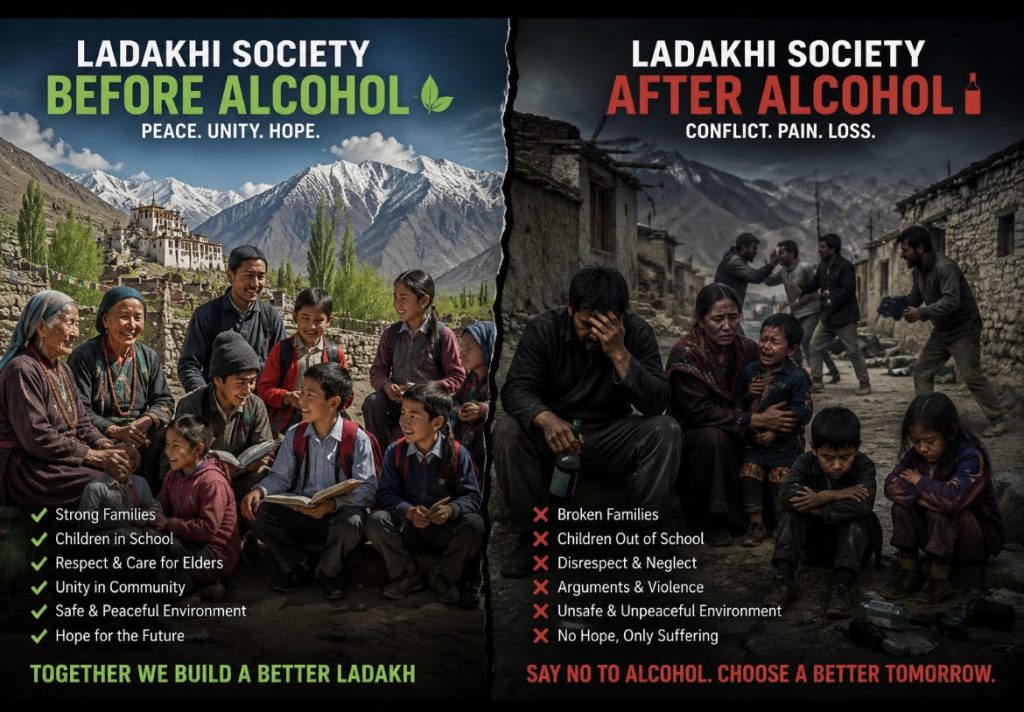
Do we really need more alcohol outlets in a spiritual land like Ladakh? Shockingly, our bureaucrats have decided to promote alcohol by increasing liquor retail outlets from two to 20 on Ladakh. They are also opening shops in regions such as Changthang, Nubra, Zangskar and Sham in Ladakh. Guest-houses and home-stays can now obtain licences to sell liquor. Earlier, this privilege was limited primarily to hotels. Even more alarming is that they are doing all this in the name of boosting tourism and addressing the issue of drug addiction in Ladakh.
The question is: Who is responsible for the increase in drug abuse and the death of youth from overdose? Alcohol often becomes the first step toward substance abuse for many people. How is it supposed to curb the drug problem? In my opinion, opening more alcohol outlets is not the solution. Instead, we should invest in better sports facilities, quality education, meaningful career opportunities, and accessible counselling and rehabilitation centres. Young people should be encouraged to build a better future rather than being offered alcohol as an alternative to drugs.
At the same time, stricter action and stronger punishment for drug dealers are essential to effectively tackle the drug problem and its roots cause on the ground.
Some people argue that promoting alcohol will help to boost tourism and generate revenue. However, Ladakh is renowned across the world for its spirituality, peaceful way of life, and unique cultural identity. It is this spiritual environment and simplicity that attracts visitors from around the world and not alcohol.
Alcohol sales may generate revenue to some extent but they can harm Ladakh’s true identity as a spiritual place. Tourists visit Ladakh because of its culture, traditions, and peaceful environment. These special qualities should be protected. Ladakh should continue to be known for its spirituality and simple way of life, and its culture should never be replaced by alcohol or drugs, no matter how much money they bring.
It’s time to change this destructive trend collectively before it’s too late. It only takes one person in a group to say, “I don’t drink.” That one voice can shift the tone of the entire gathering. Step by step, we can challenge the belief that alcohol is needed to enjoy life. And if even one person reading this chooses to say no, chooses clarity over confusion, it is a start.
You don’t have to be the loudest, funniest, or most exciting in the group. It’s ok to be the odd one out or work our way through various emotions. There’s nothing wrong with being the quiet one.
All you need to do is to listen to yourself. Your body and mind always tell you the truth when you feel dizzy from smoking, when your blood slows down from drinking alcohol, when your energy dulls under the weight of substances. You’re not just celebrating, you’re slowly breaking down.
So, the next time there is a celebration, try saying no to alcohol or any substances. Host a get-together without alcohol. Choose real laughter, real stories, real memories and choose to be present. Can you do that at least once in your lifetime? Remember, you can celebrate without addictive substances or alcohol. You can be happy without it. And you are strong enough to say, “I don’t.”
By Padma Dolkar
Padma Dolkar has graduated from GGM Science College, Jammu. She has a keen interest in understanding how societies evolve and how social change shapes communities over time.