
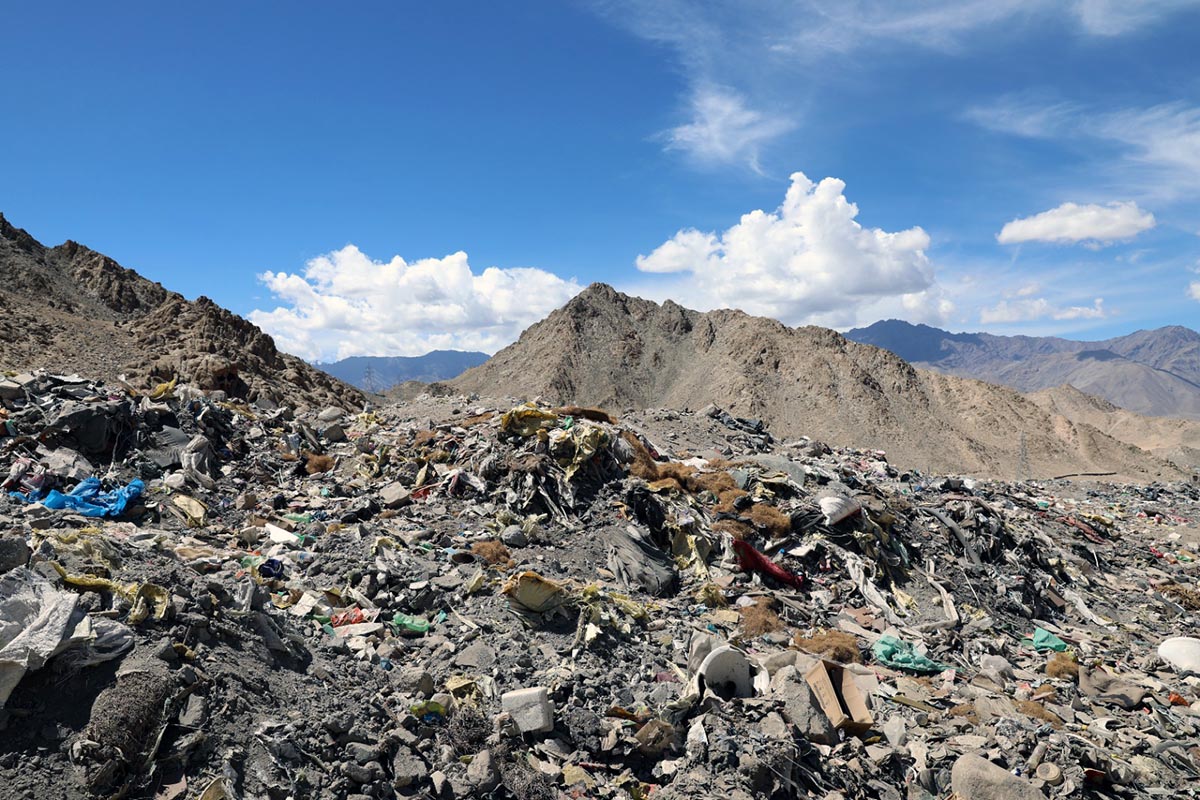
Leh is the cultural and administrative heart of the Indian Himalayas. It is now confronting a mounting solid waste management (SWM) crisis. According to the Waste Flow Diagram Report for Leh (2024), the town generates seven to eight tonnes of waste daily in the winter, which escalates dramatically to 30–40 tonnes during the tourist season in the summer. Alarmingly, only about one-third of this waste is collected in summer, while in winter nearly half of the waste generated is left unattended. This imbalance results in over 3,000 tonnes of waste accumulating each year in streets, drains, and open spaces around Leh town causing increased environmental and public health risks.
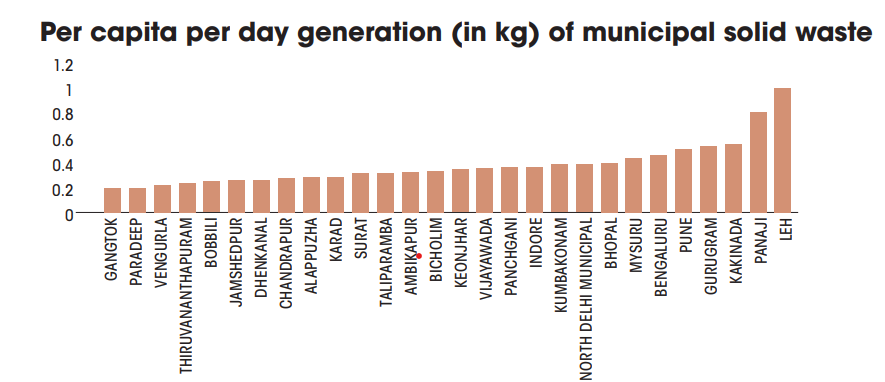
The Waste-Wise Cities report by the Centre for Science and Environment (CSE) and NITI Aayog identifies Leh as having the highest per capita waste generation among small Indian towns. This underscores the pressures of modern consumption patterns, seasonal tourism, and urban expansion on the fragile Himalayan ecosystem.
Tourism: A double-edged sword
Tourism significantly amplifies waste generation. Summer months bring surges of PET bottles, multi-layered plastics, and snack packaging, which overwhelm waste collection systems. Narrow lanes, steep terrain, and heavy snowfall in winter further impede the transport of waste to the central Skampari facility, resulting in extended delays and intermittent collection.
Population projections indicate a steady growth trajectory, with the combined population of Leh and Choglamsar expected to reach 81,654 by 2030, up from 66,712 in 2023. Employing a weighted per capita waste generation of 0.39 kg/day in winter and 0.99 kg/day in summer, the town could be producing over 60 tonnes of waste daily by 2030, translating to more than 22,000 tonnes annually.
| Year | Combined Population | Estimated Waste (t/day) | Estimated Annual Waste (t) |
| 2023 | 66,712 | 49.5 | 18,073 |
| 2024 | 68,786 | 51.1 | 18,650 |
| 2025 | 65,860 | 48.9 | 17,848 |
| 2026 | 71,089 | 52.8 | 19,272 |
| 2027 | 66,660 | 49.5 | 18,068 |
| 2028 | 77,004 | 57.2 | 20,858 |
| 2029 | 79,329 | 58.9 | 21,500 |
| 2030 | 81,654 | 60.6 | 22,109 |
Why centralised systems fail in the mountains
For some years, Leh has relied on the Skampari Material Recovery Facility (MRF) as its primary waste processing hub. While indispensable, the facility faces critical constraints: outdated machinery, manpower shortages, and inefficiencies in transporting waste from different parts of the town. During peak tourist seasons, this centralised system is frequently overwhelmed, resulting in uncollected waste accumulating in public spaces.
Executive Officer of Municipal Committee Leh (MCL), Stanzin Rabgais said, “Waste is a serious problem during the peak tourist season, and our plants are already operating beyond capacity. Decentralisation is the way forward, and we are actively developing a comprehensive decentralised SWM plan in partnership with LEDeG.”
The case for decentralisation
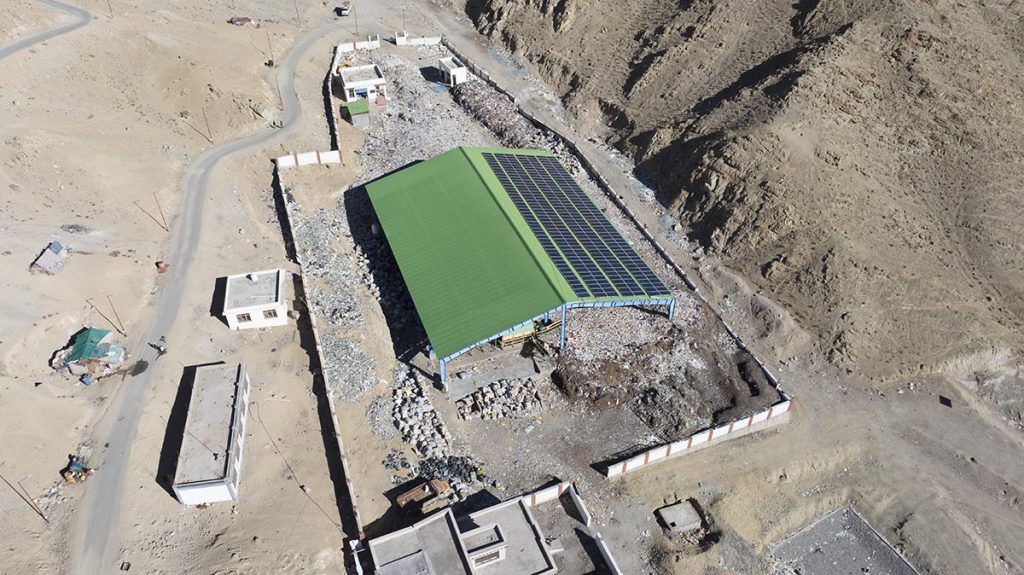
Decentralised waste facilities in Leh are not merely add-ons to the central system but critical nodes within an integrated, zonal approach to solid waste management. Instead of long-haul transport to a single overburdened plant, waste streams are stabilised closer to their point of generation. Wet waste is managed through climate-adapted modular units—composting or bio-methanation systems calibrated for small daily loads (1–10 TPD) with thermal regulation and renewable energy inputs, ensuring operability even in sub-zero winters. Dry waste flows are aggregated at strategically located material recovery clusters, designed for efficient segregation and market linkages with regional recyclers.
These decentralised nodes build upon familiar community practices but are engineered to contemporary standards of resource recovery and emission control. When fully scaled, such a network can divert a significant amount of organic fractions and recyclables away from landfills, cut hundreds of annual truck trips, and prevent significant methane and carbon dioxide emissions. Beyond environmental gains, they create a visible ward-level accountability structure, embed service delivery within the urban fabric, and open up new livelihood avenues in composting, recycling, and facility management. If scaled town-wide, these systems could achieve up to 90% diversion of waste fractions, balancing technical credibility with measurable outcomes.
Geographic imperatives for decentralised systems
Leh’s challenging topography, steep lanes, scattered settlements, and icy winters renders a single centralised facility impractical. Establishing a network of smaller, climate-resilient plants proximate to waste generation points would minimise transportation distances, reduce operational costs, and curtail environmental impacts. Wet waste could be composted on-site, recyclables processed locally, and residuals safely disposed to create a tiered, efficient, and contextually adapted SWM system.
Towards a waste-wise Leh
By 2030, Leh will generate an estimated 22,000 tonnes or more annually, with daily peaks exceeding 60 tonnes. Without decisive interventions, these volumes risk overwhelming municipal infrastructure, escalating environmental degradation, and compromising public health.
Decentralisation is no longer optional; it is essential for sustainable urban management in mountain contexts. As Stanzin Rabgais explained, “Centralised systems alone cannot keep pace with rising consumption, seasonal tourism, or the realities of mountain life. Localised solutions are the only viable path forward.”
Through strategic integration of modern decentralised facilities, community engagement, and engineered community practices. Leh town is at a crossroad. Continue with an overstretched centralised system, or pioneer a decentralised model that keeps the mountain region clean, resilient, and future-ready. The choice is urgent, but the opportunity is transformative.
By Stanzin Odsal
Stanzin Odsal is an urban planner and environmental researcher based in Leh. He is also the co-founder of Plannable Co., which is dedicated to urban, rural and heritage planning solutions in the Himalayas.