
Ladakh is undergoing significant administrative and developmental changes within the Union Territory framework with several decisions being made to bring governance closer to the people. Among the most notable steps is the approval for the creation of five new districts: Nubra, Sham, Changthang, Zanskar, and Drass, which takes the total administrative units in Ladakh from two to seven. This move is expected to decentralise governance, improve delivery of services in remote regions, and create fresh opportunities for employment and local entrepreneurship. For a region defined by difficult terrain and scattered populations, such administrative restructuring can play an important role in ensuring that governance is more accessible, responsive, and efficient.
Beyond the creation of new districts, the broader intent appears to be a strengthening of institutional mechanisms to support Ladakh’s long term development. Improved connectivity, better access to welfare schemes, and more localised decision making are expected outcomes of decentralisation. In Ladakh, where distance and geography often shape access to opportunity, such steps can have a meaningful impact on everyday life.
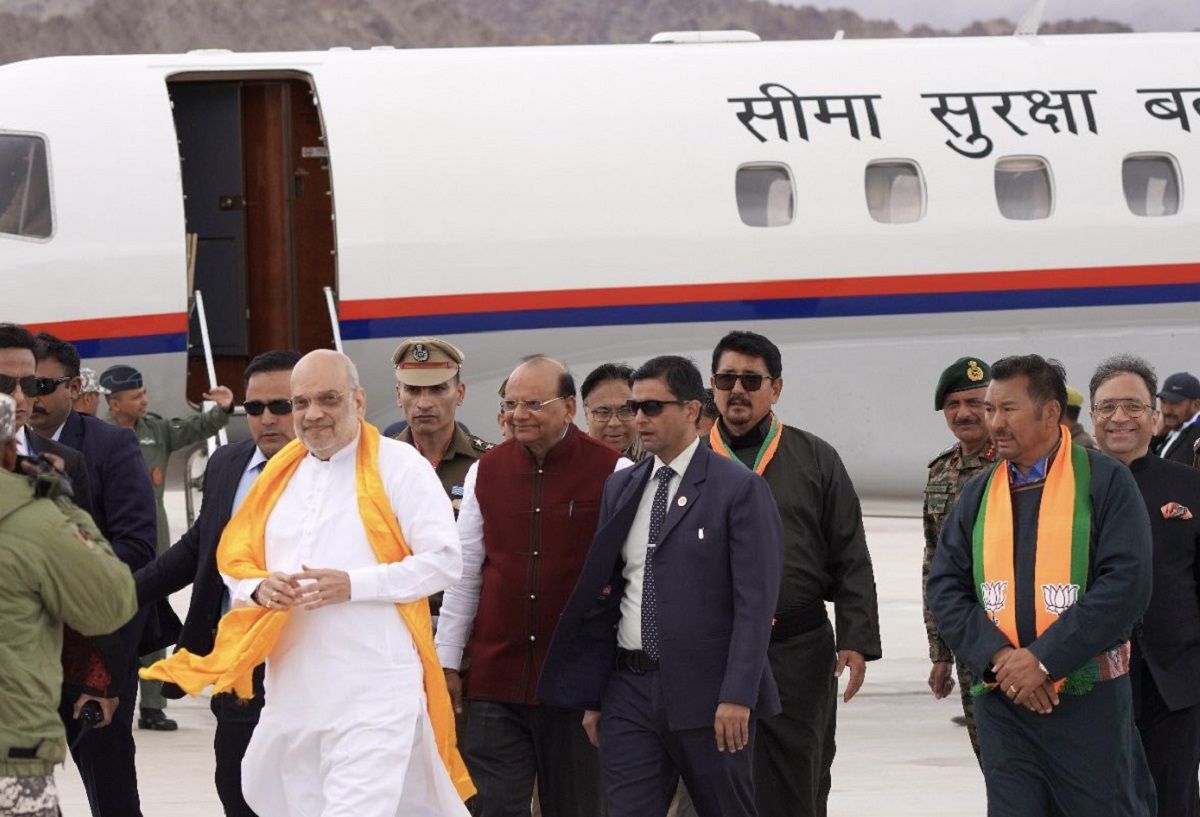
In addition, there are continued efforts at political engagement. Union Home Minister, Amit Shah is scheduled to reach Ladakh on 30 April for a two-day visit. He is expected to participate in key engagements and interact with various stakeholders. Such visits along with scheduled interactions between government representatives and local stakeholders reflect an attempt to address the region’s aspirations through dialogues. These engagements serve as platforms for the government and local stakeholders to articulate concerns, expectations, and pathways forward.
In this regard, certain issues voiced by civil society groups and local representatives remain central to this discourse. This includes demands related to statehood and inclusion under the Sixth Schedule, which are seen by some groups as mechanisms to ensure greater political representation and protection of local identity and land rights. Environmental concerns have also been a part of the conversation given Ladakh’s fragile ecosystem and the negative impacts of rapid development.
Furthermore, the events of 24 September, 2025 in Leh, when protests escalated into violence and resulted in injuries, loss of life, and damage to property, continue to cast a shadow on current dialogues. Different stakeholders provide varying interpretations of what transpired. Civil society groups have called for withdrawal of cases against protestors, compensation for affected families, and more immediate and visible political engagement. These demands reflect underlying concerns about justice, accountability, and trust.
In response, institutional processes have been set in motion. A judicial inquiry has been commissioned to examine the events in detail. Legal proceedings continue, and many of those who were detained have been granted bail. Such steps highlight the role of formal mechanisms to address complex and sensitive situations, while also providing space for grievances to be examined in a structured manner.
Another area of discussion has been the format and pace of dialogues between stakeholders and the government. Civil society groups have demanded more immediate engagement at the highest levels, while the government has adopted phased consultations through designated committees and institutional forums. This approach seeks to balance the need for timely responses with the importance of detailed deliberation and consensus building. It also reflects the challenges of addressing multiple demands in a region with diverse perspectives.
The broader challenge for Ladakh lies in aligning multiple priorities such as development, representation, environmental sustainability, and cultural preservation within a framework that ensures stability and inclusivity. The region’s strategic location adds another layer of importance, making it essential that governance and development are handled with sensitivity and foresight. Efforts to improve infrastructure, tourism, and economic opportunities must therefore be accompanied by measures that safeguard Ladakh’s unique heritage and ecological balance. Ultimately, Ladakh’s future will depend on sustained cooperation between the administration and civil society. Development initiatives such as new districts, infrastructure expansion, and improved governance frameworks can bring tangible benefits, but their long term success will depend on trust, participation, and continued dialogue. A balanced approach that combines administrative reform with responsive and inclusive engagement offers the most promising path forward.
Rishi Suri is Senior Editor of The Daily Milap.
By Rishi Suri
(Image: Minister for Home Affairs, Government of India Amit Shah arriving in Leh on 30 April, 2026. Photography courtesy: PTI).